Total Pageviews

Blog Archive

2013-10-19

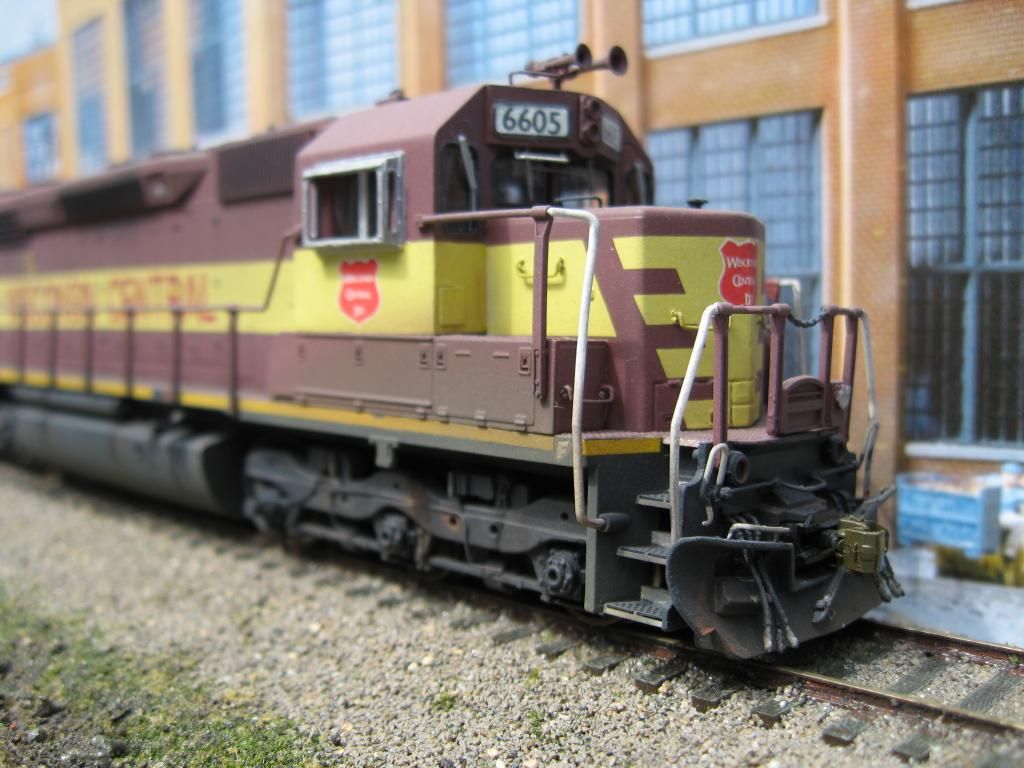
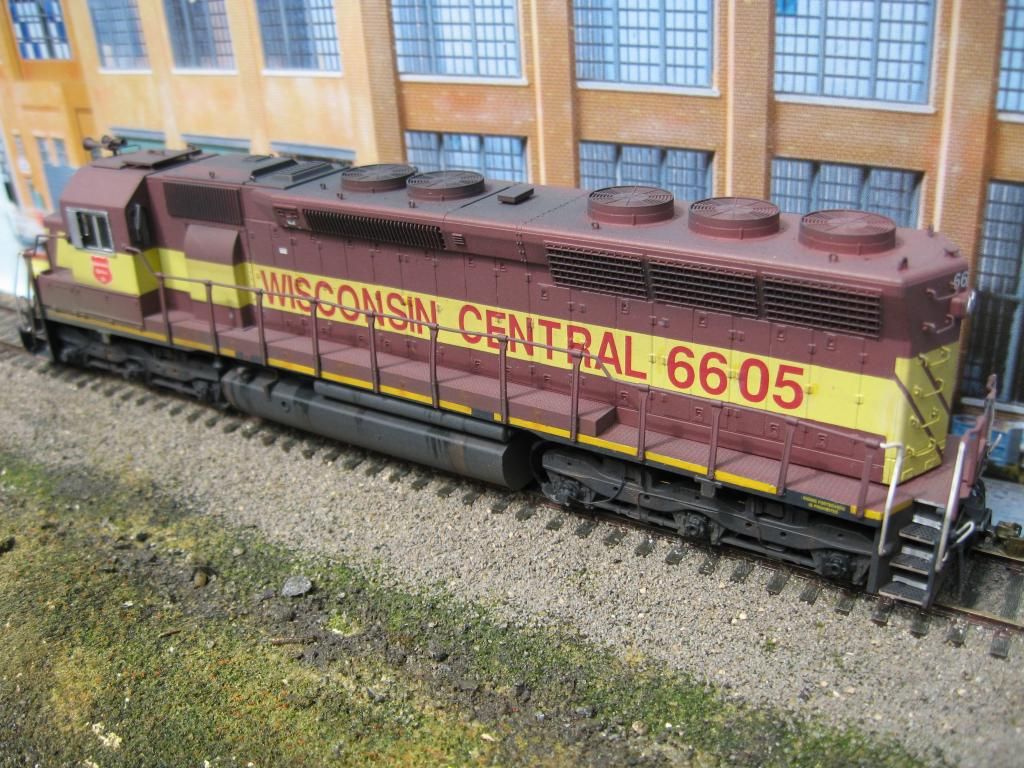
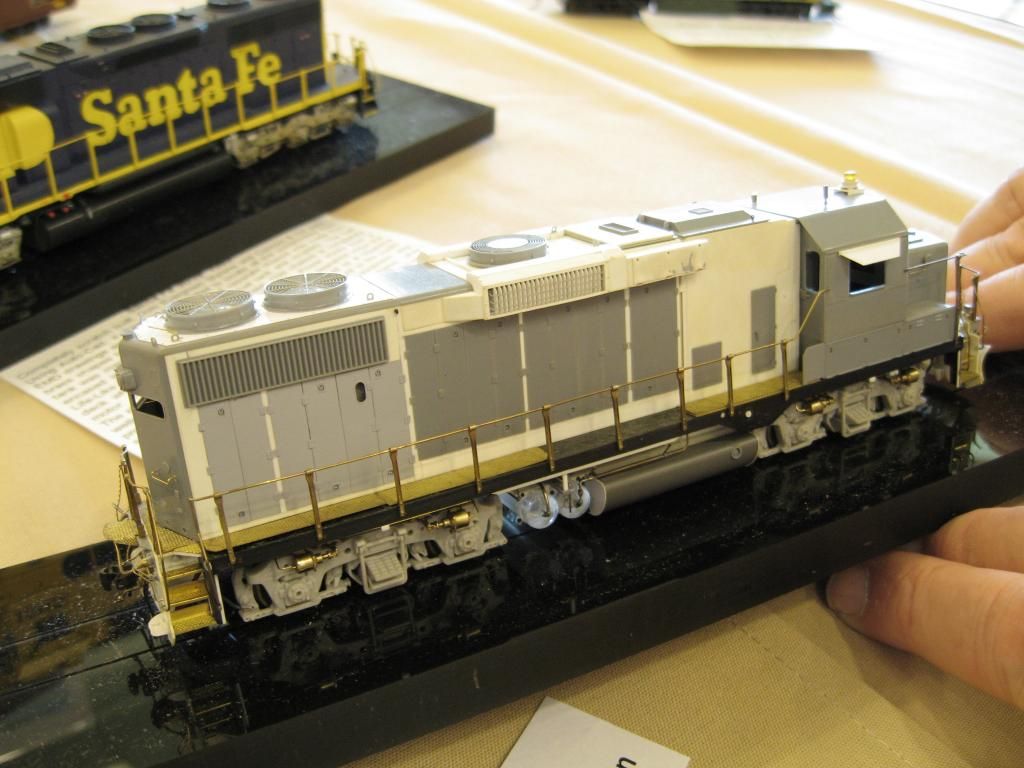
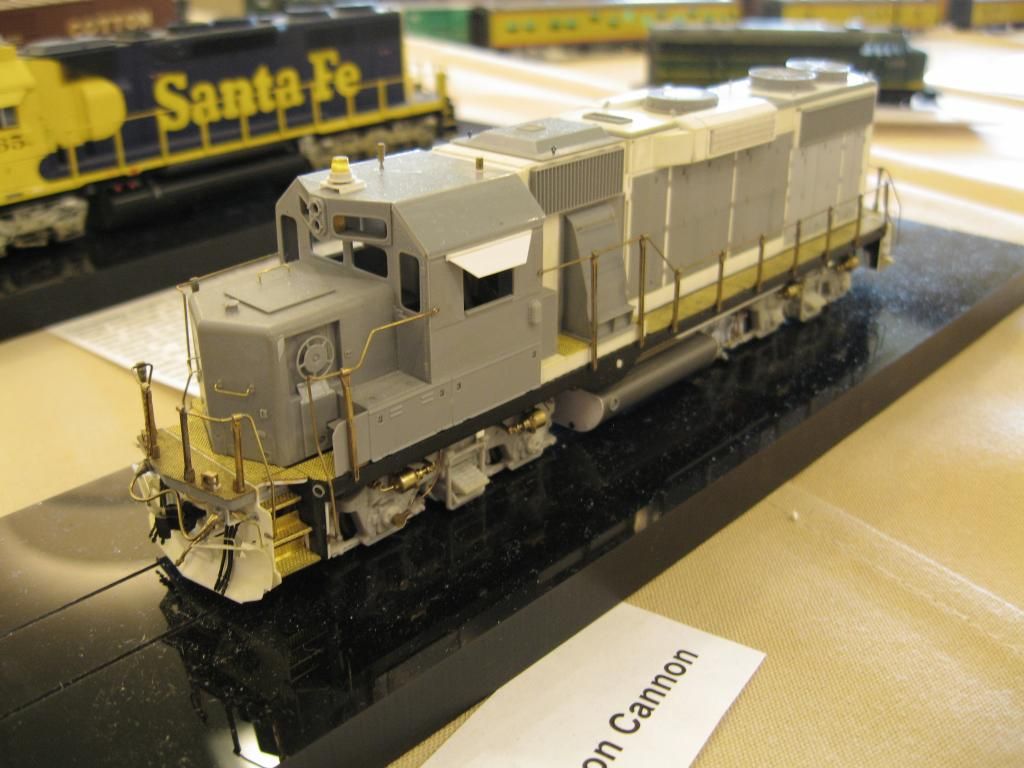
Wisconsin Central SD45 #6605

Having been in a business agreement with CNR since 1996, the Wisconsin Central was bought by the CNR in 2001, along with the Illinois Central.  Though 2001 would be at the very end of my operating era, it is possible to find mixed WC/CN lashups in the mid-90s.  Spying one of these behemoths in the picturesque countryside of Wisconsin in mid 2001, I knew I'd have to have one of my own... in 1/87th scale.


The heritage of this unit is unmistakably AT&SF, with it's assortment of antennae decks on the cab roof, along with the distinctive horn placement.  Having snapped photos of this unit in the mid-90s, it hadn't gone "under the knife" at MK Rail.  This is evident from the Flex-ix-oil trucks with low-slung brake cylinders.

The remnants of a 3-pane, all-weather window is evident on either side of the cab, but in unique ways.  The engineer's side was fabricated from 2 Detail Associates frames, spliced together.  The fireman's side was made using styrene stock and pounce wheel.  The antenna plates were scratch-built with styrene and brass stock.
The head-end of the unit sports the usual pilot face details from Details Associates, (M.U. hoses, ditch lights and coupler-lift bars,) Details West, (train line hose and headlight casting.)  The wipers are by A-line, and the plough was a re-shaped Atlas product.
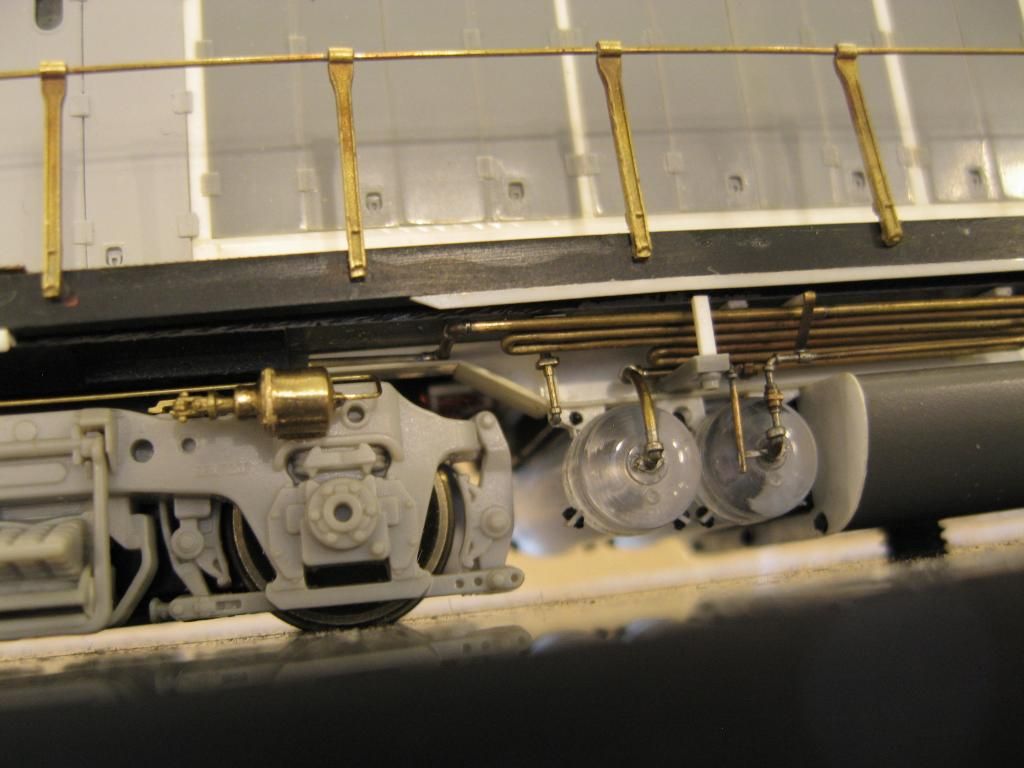
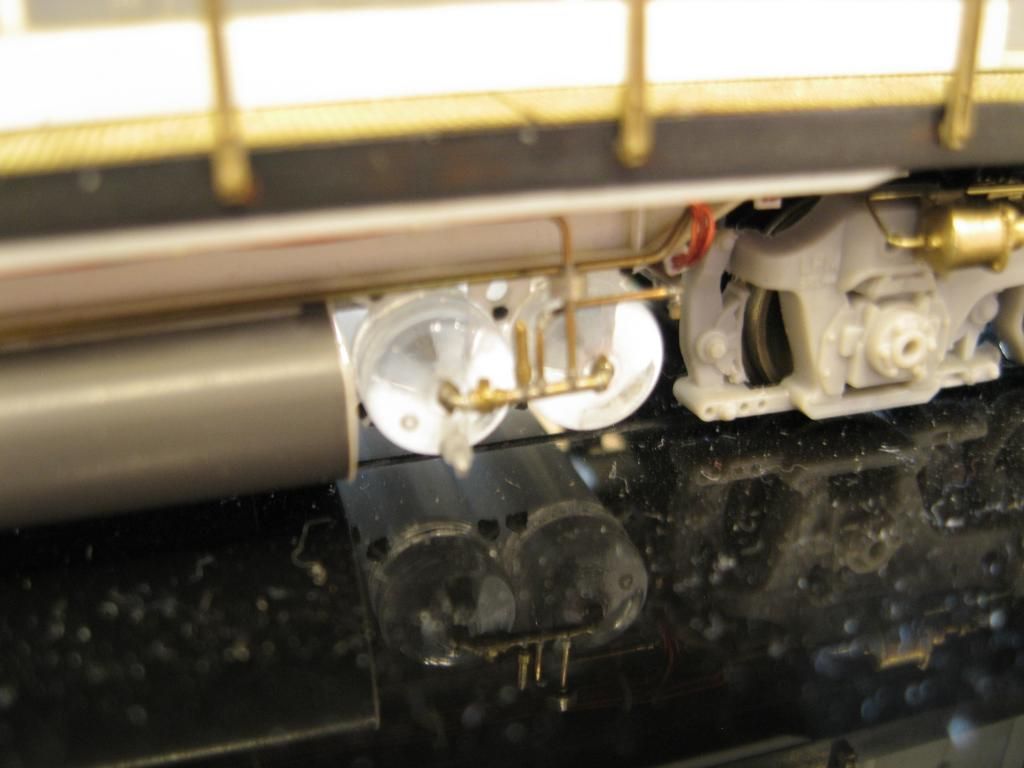
The flex-i-coil sideframes sport scratch-built speed recorders.  This was done with styrene stock and single-stranded wire.  The conduits across the sideframes were made using the metal wire inside the single-stranded electrical wire.   Sand lines were made using 24 gauge electrical wire insulation.


The usual array of eyelets adorn the roof of the unit.  Future upgrades for the unit include the installation of see-through fan grilles with blades.  Revised handrails would very much improve the appearance of this project.  Note the A-Line etched steps.  The unit was painted with Testor's Polly Scale WC Maroon acrylic paint.  The yellow, along with the lettering is Microscale Decals.  Weathering is the usual array of chalks, dilute airbrush washes and dry-brushing.

2013-10-18

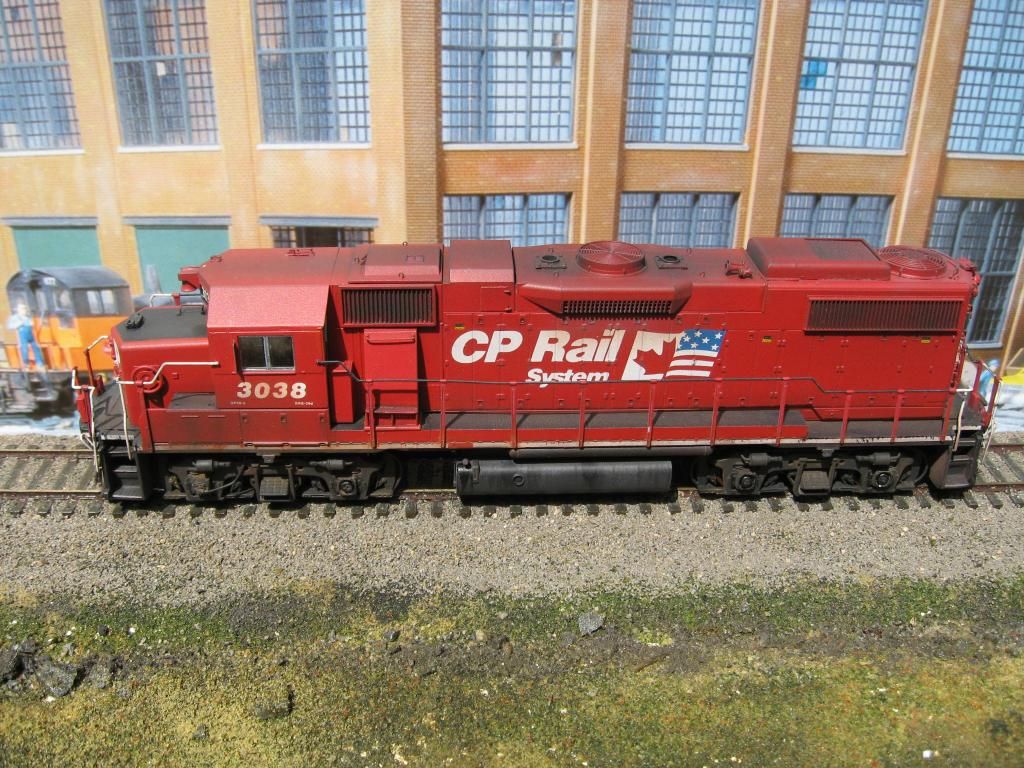
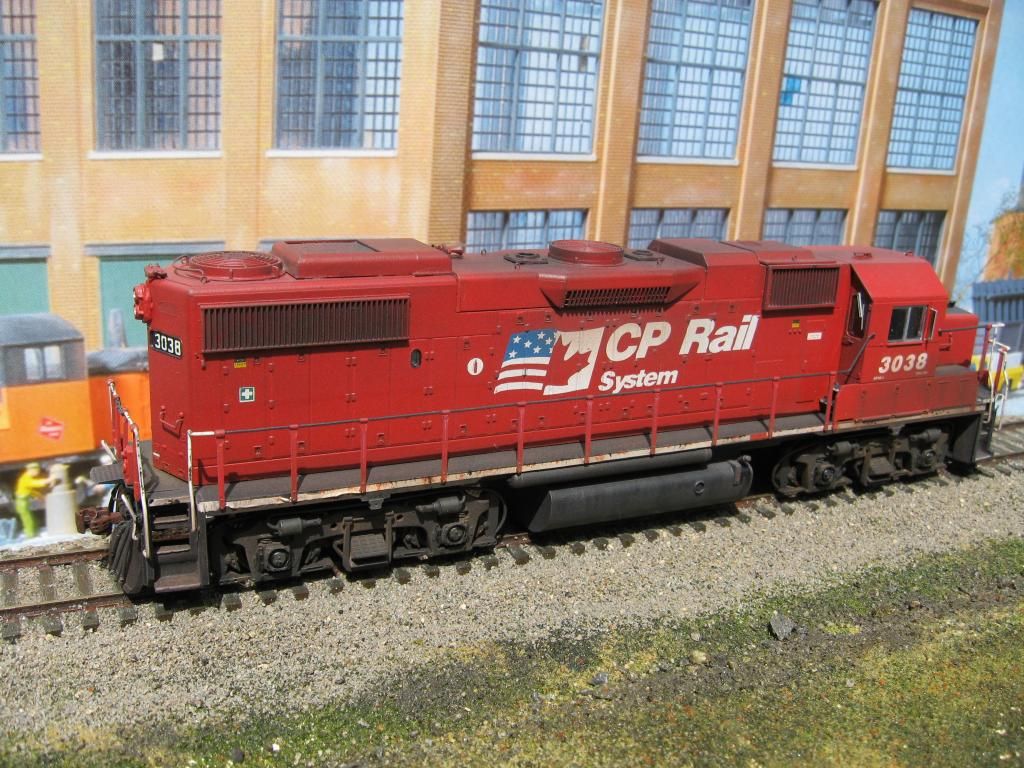
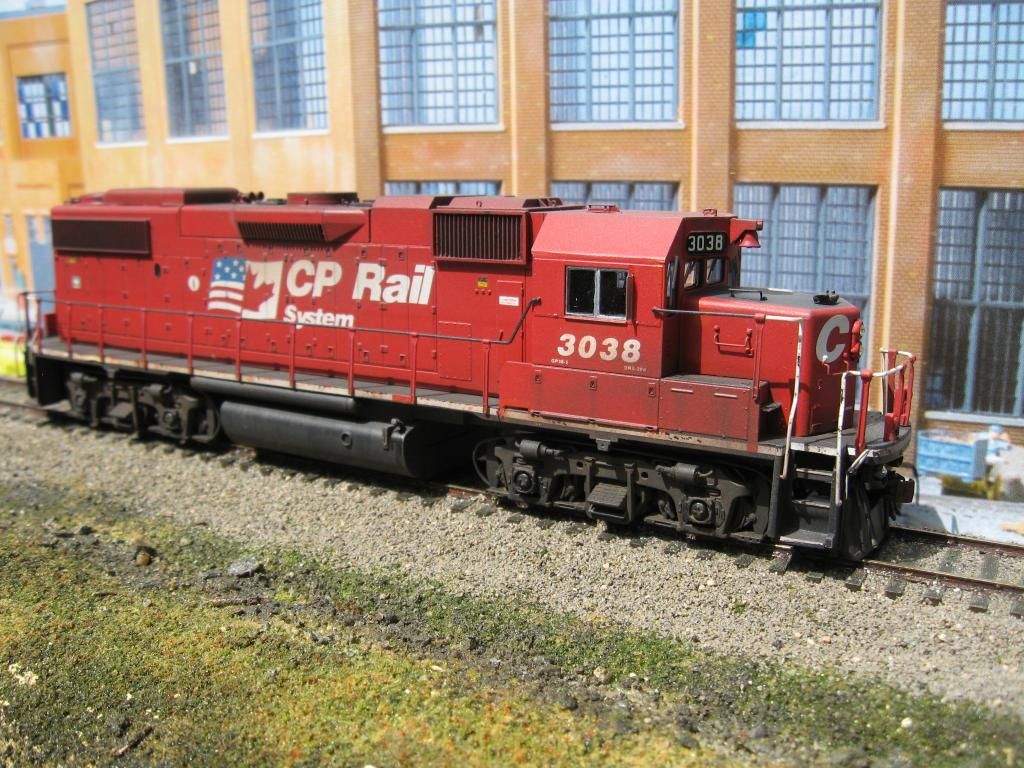
CPR GP38-2 #3038

These EMD units first made an impression on me in Smith's Falls, Ont.  They were repainted into the "Two Flags" CPR scheme and assigned to haul the "Iron Highway."  This was the pilot project that lead to the current "Xpressway" trains being aimed at diverting truck traffic from the 401 between Montreal and Toronto.  Watching these units scream out of the station, as the engineers wrung their necks in an attempt to keep on a strict schedule was impressive, to say the least.


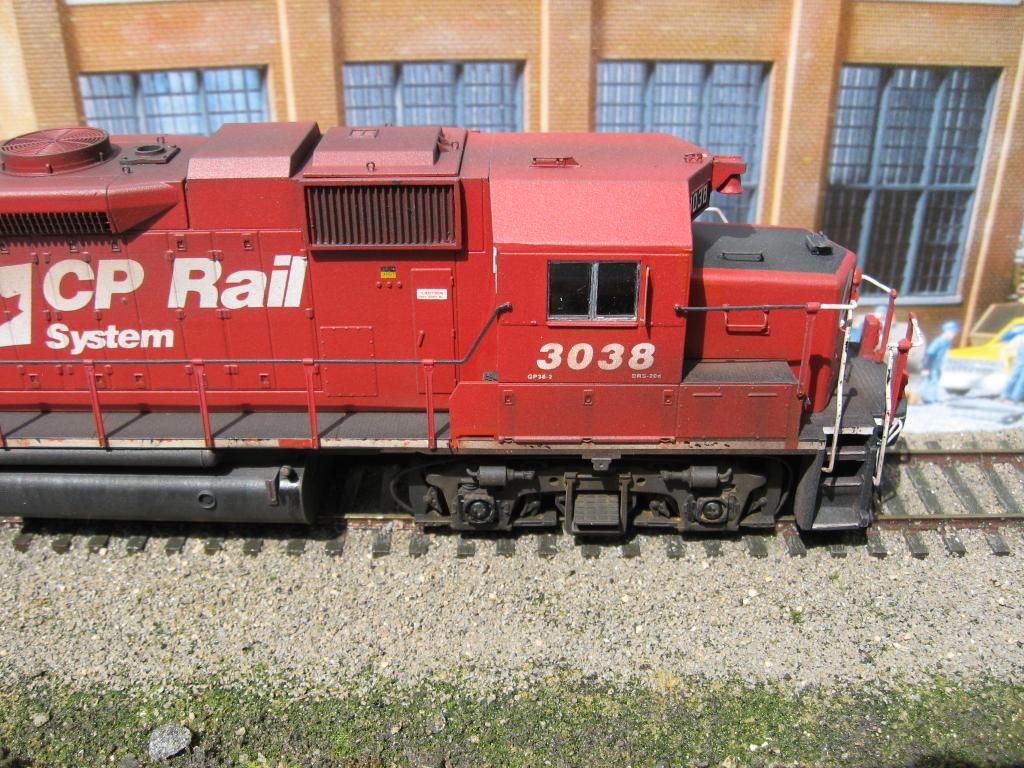
This unit started as an undecorated Proto2000 GP38-2.  Among the numerous modifications, it received, Miniatures by Eric CPR step wells, anti-climber, M.U. stands, ditch and headlight lenses, brake wheel and bell.  A Cannon and Co. angled blower housing was assembled and replaced the original, rounded type.

The inertial filter screens have scratch-built framing installed.  Details Associates antennae adorn the roof of the cab.


The exhaust hatches are, again, Miniatures by Eric parts.  The access door ahead of the dynamic break "blister" is scratch-built from Kaslo etchings and a piece of 0.005" styrene.  The horn is a brass casting by Details West, and Details Associates supplied both the winterization hatch and "Q" fan.


The roller-bearing caps are Miniature by Eric.  This is a vital piece of detail, in my opinion.  I love watching the caps spinning as the locomotive moves.  Maybe I can engineer scale, working roller bearings someday?  


The handrails and stanchions across the front anticlimber are Utah Pacific stanchions with hand-bent brass wire railings.  The stock handrails, conveniently, come cast with the vertical runs as seperate pieces. The vertical runs are hand-bent brass wire attached to the stock stanchions.  The paint is Tamiya Gloss Red and Testor's Semi-gloss black.  The decals are Microscale.  The unit was weathered with chalks, dilute airbrushing and dry-brushing.  Note the patches left behind when the class lights were removed.


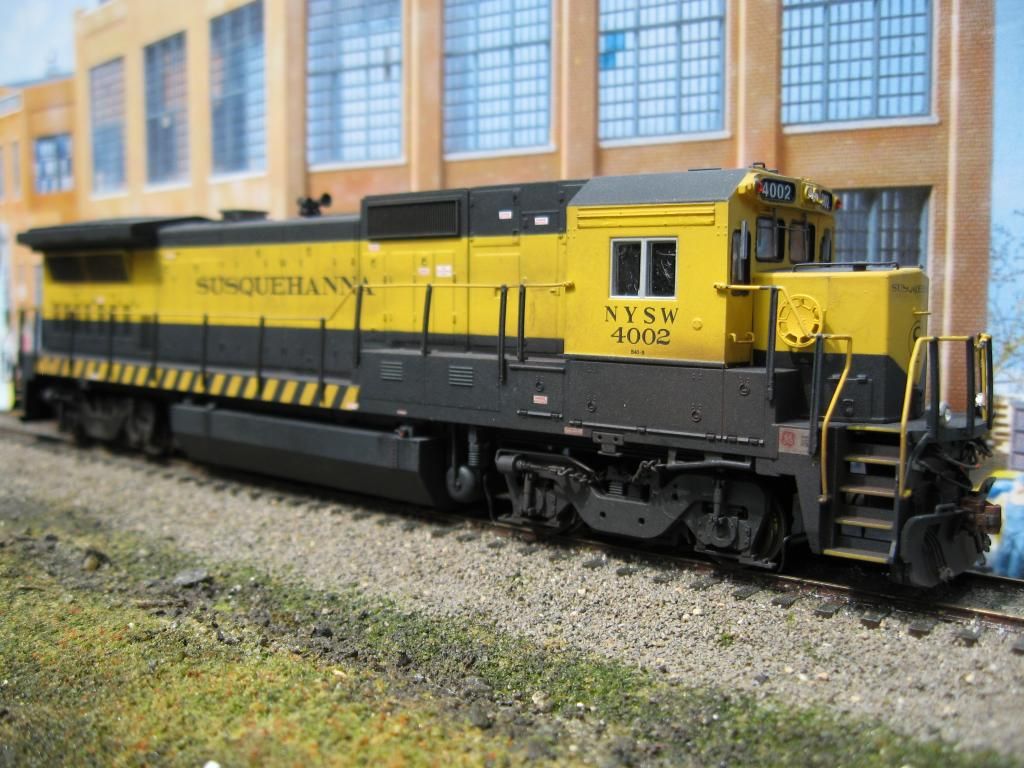
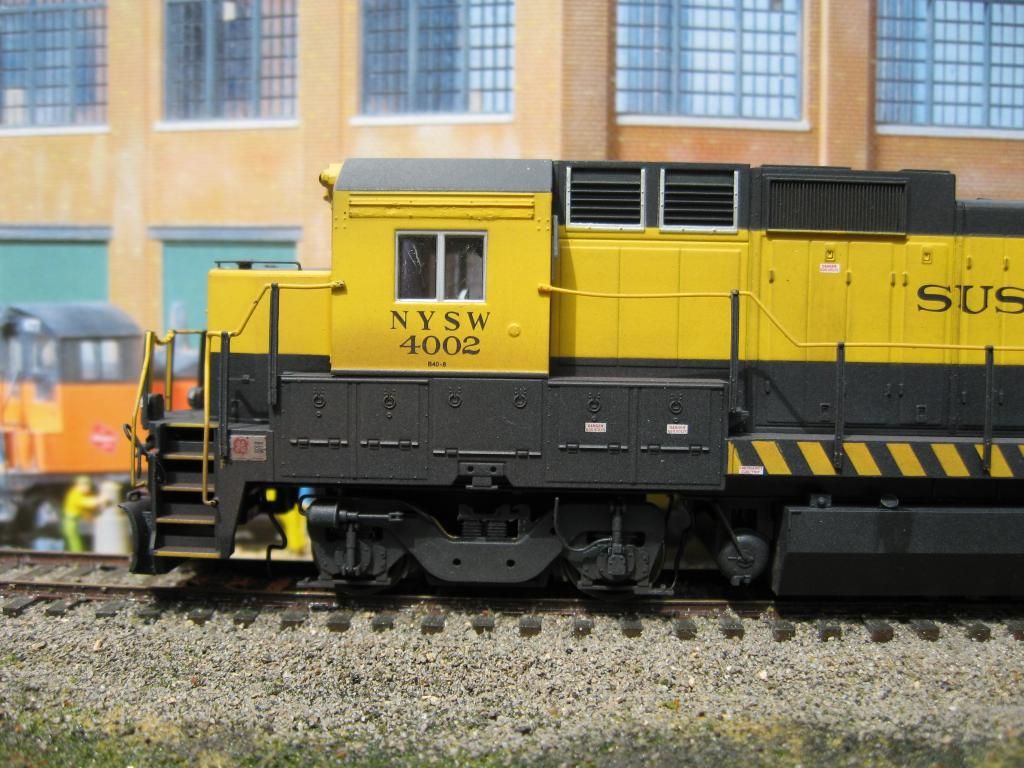
NYS&W B40-8 #4002

With handsome and utilitarian lines, along with a smart and attractive paint scheme, these turbo-charged GE, BB-axle units got a lot of publicity for units that had a short tenure on the New York, Susquehanna and Western.  (They were sold to P&W in 2004, after only being with the NYSW since 1988.)  Travelling to Syracuse and Binghamton for model train shows, I would always insist on watching some trains, sometimes dragging the family along.  These units, along with any of the other NYSW fleet at the time, captured my imagination, and will always have a spot in my heart.

Starting off as a beautifully-executed Atlas Master Series decorated model, the stock model needed only minor tweaking and weathering to best represent the prototype.


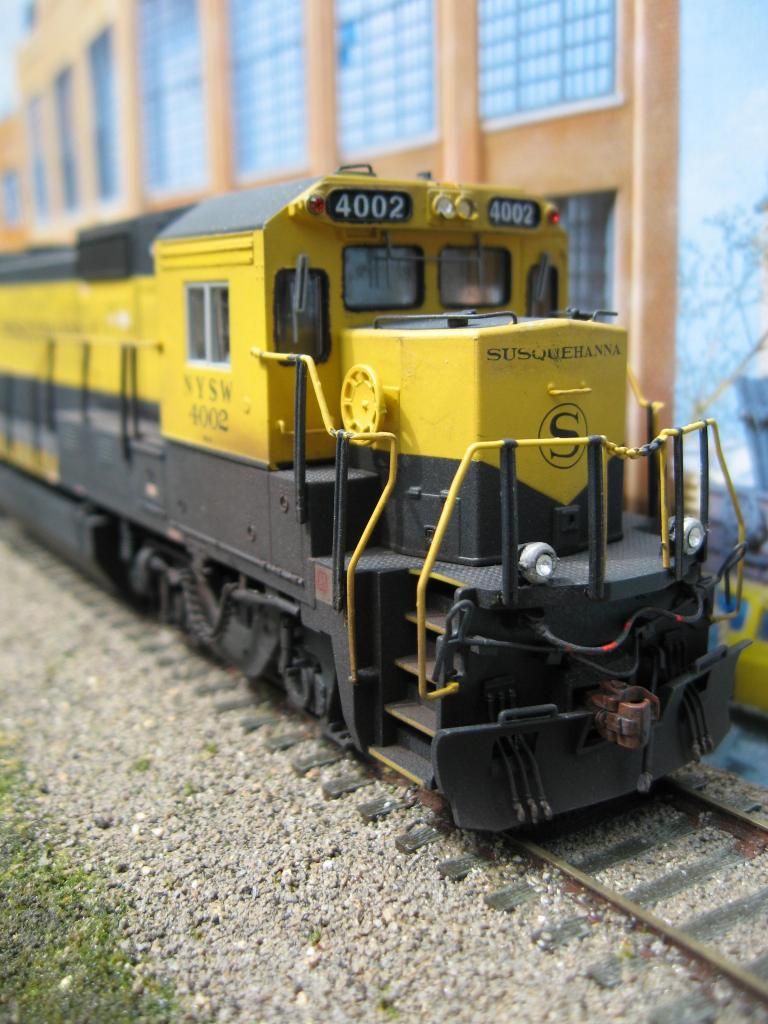
One of the only details omitted from the model were ditch lights.  I built custom stands for Details Associates lenses.  The M.U. hose and receptacles were removed, and replaced with Details West plugs and single-stranded wire.  The plow was re-countoured, and Kadee #58 couplers were added.  Though Atlas considerately drilled holes and provided sun shades, they were absent on the prototype.
Lastly, the horn supplied did not match my photos of #4002.  A Details West brass casting was used to replace the stock unit.  One highlight of the GE units tends to be the myriad of cooling grills at the end of the long hood.  Using some Grimy Black mixed with Railroad Tie Brown really invokes the illusion of depth and strikes a nice contrast with both the black and yellow.


Check out all those factory-supplied truck details!  Sand lines, speed recorders and brake lines, all done!  Weathering was done using chalks, dilute airbrush washes and dry-brushing.  It was all sealed with Testors' Dullcoat.  To finish off the model, I used MV lenses for all lights, including the distinctive red markers.

2012-11-04

RPM Naperville 2012 Gallery

It seems there was a distinct shortage of media coverage for one of the biggest Railroad Prototype Modeller's meets in North America.

Posted below are just some of the supreme modelling and craftsman skills displayed at Naperville 2012.

I apologize for the lack of pertinent information on builders, etc.  I wasn't planning on becoming an impromptu reporter.

If anyone is the builder or knows the builders of any of these models, please email me.  I will gladly add captions.  

Such beautiful model builders deserve the encouragement!

Enjoy!
Efram

(You can click the thumbnails for higher-resolution images.)


A fabulous N-scale "free-mo" layout, sporting superb scenery and details such as scale switch stands and joint bars.
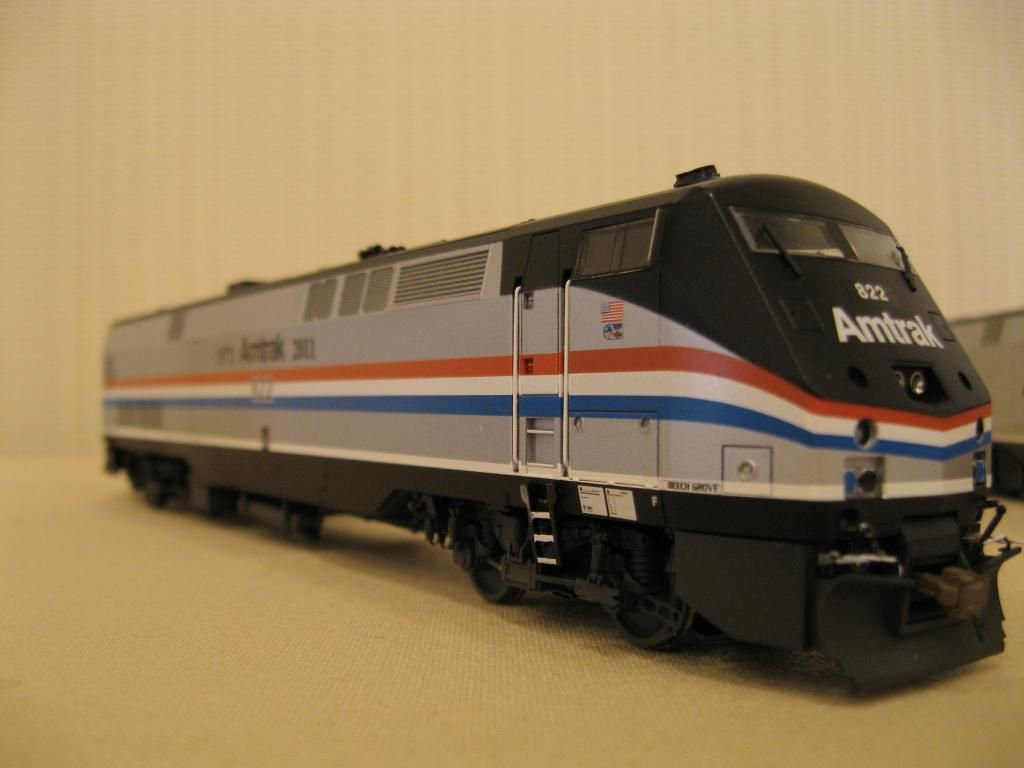
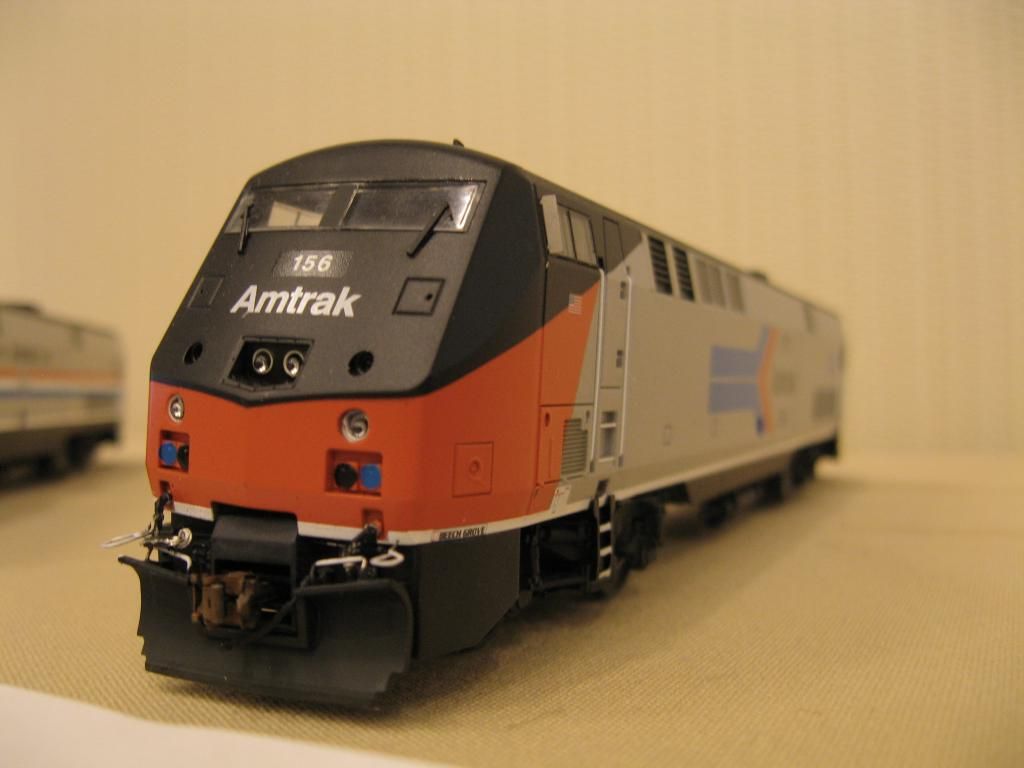
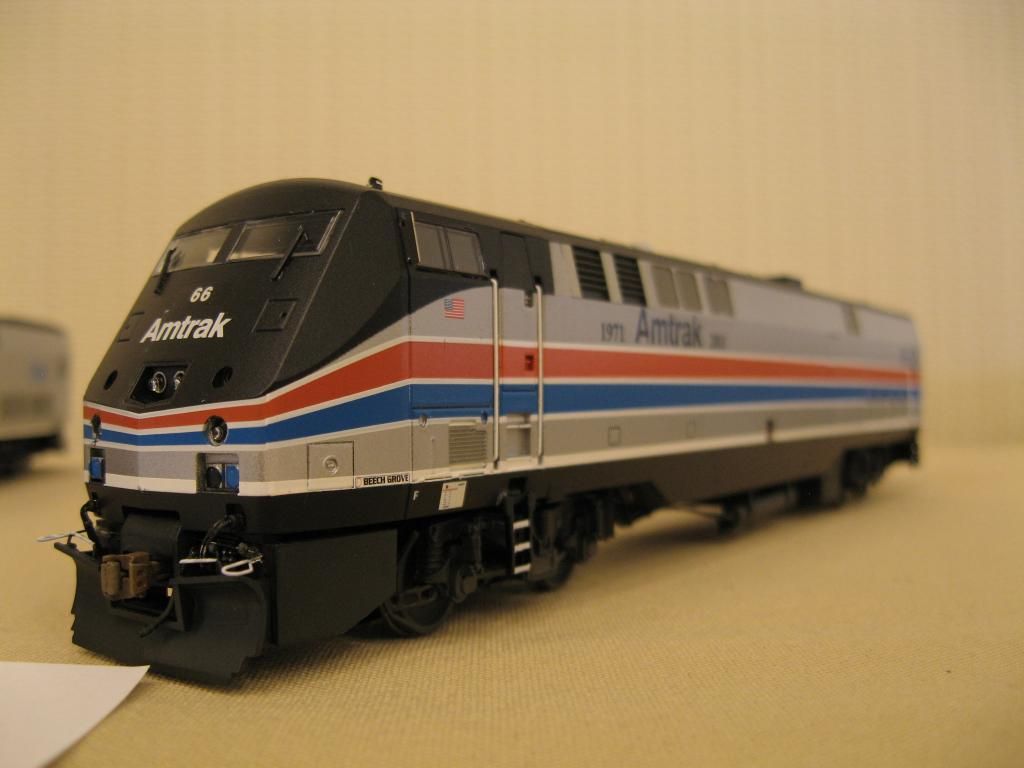
Amtrak's Heritage paint schemes adorn these well-built HO scale Athearn GE P42s with full Details West "upgrade" kits.


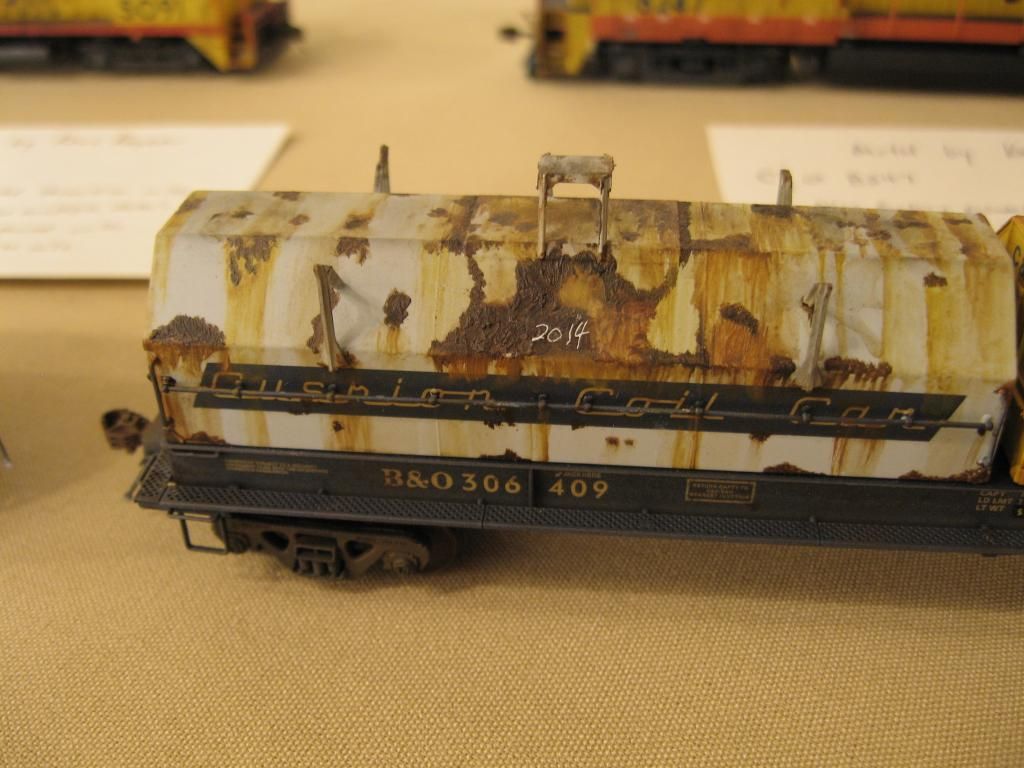
Probably the most convincing rust I have ever seen with my own eyes.  Stand out!


An elegant CB&Q E9.   Note the cab sun visors.


Meticulous craftsmanship abound on this brass, HO scale loco.  Soldering skills like these are few and far between in model railroading.


A CRI&P rebuilt E6a. Fine craftsmanship on the scratch built cab.


An N scale AT&SF C44-9W.  The weathering is extra impressive when you consider it's 1:160th scale.


A fully scratch built cab interior on the left, in a Proto2000 GP cab.  On the right, beautiful weathering on a C&NW SD40.


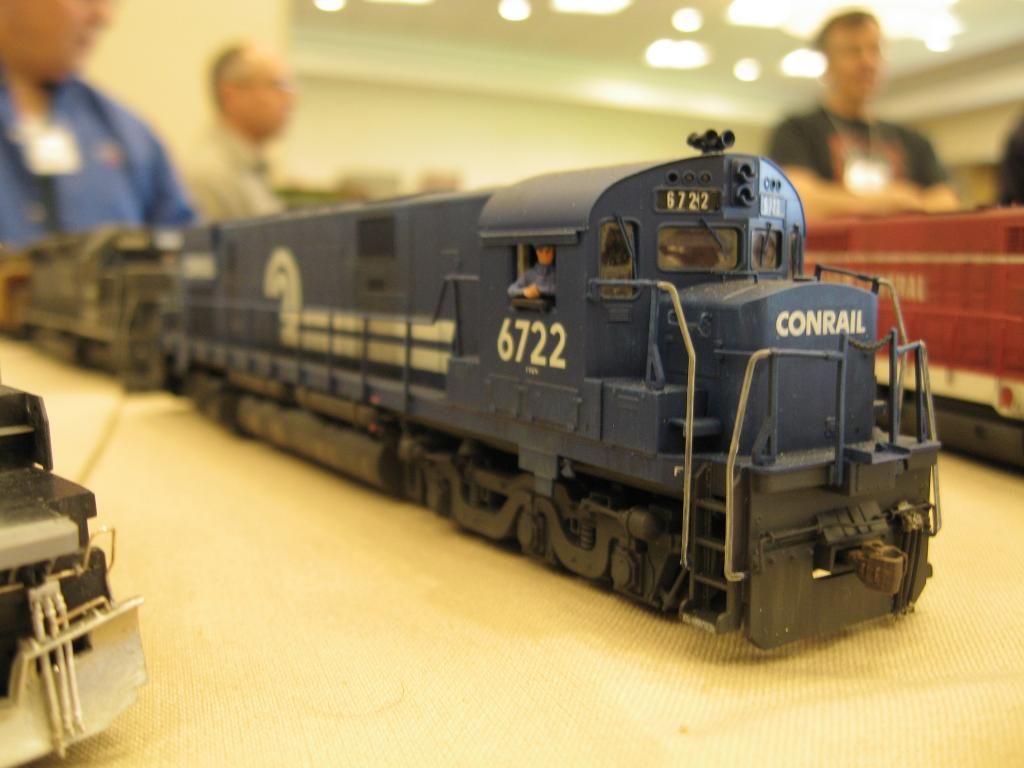
A Conrail slug set, with an MT6 slug. It was heavily kit bashed from the frame-up. A complete Railflyer Model Products fuel tank on the left. 


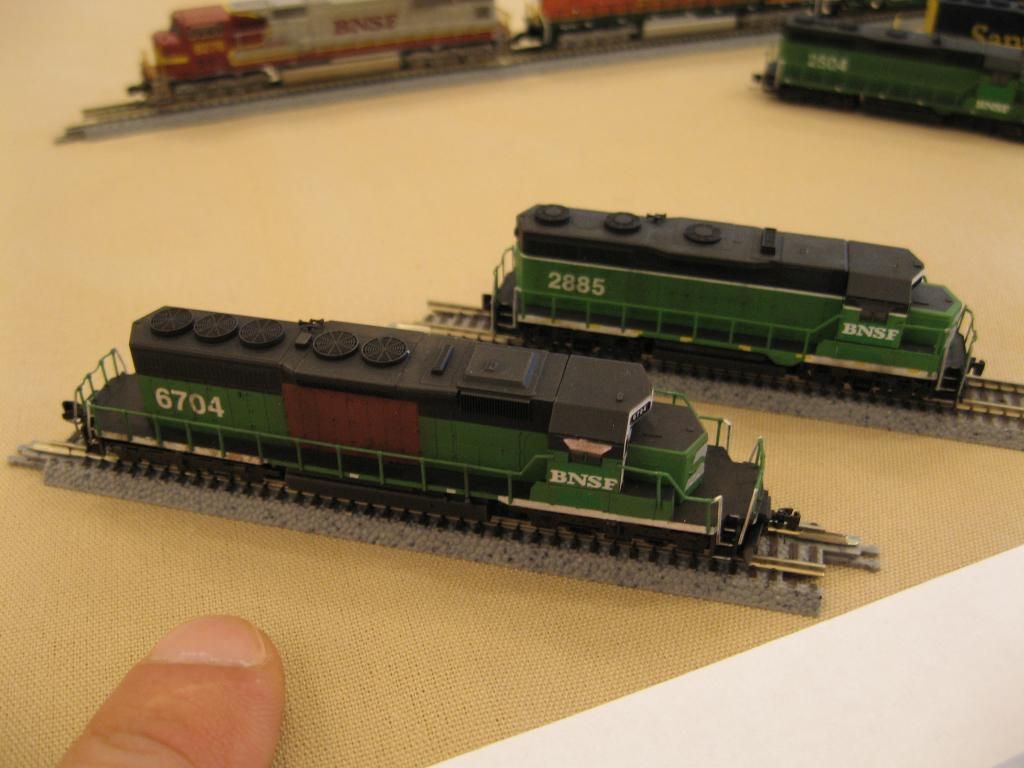
Z scale. Note my index finger, for reference.


This BL20-2 was scratch built using styrene and Cannon and Co. components.  It displays the most immaculate and detailed under-frame plumbing I have EVER seen.  Sublime!


Note the windshield washer streaks in the windows of the Conrail ALCo C628.  


2012-07-09

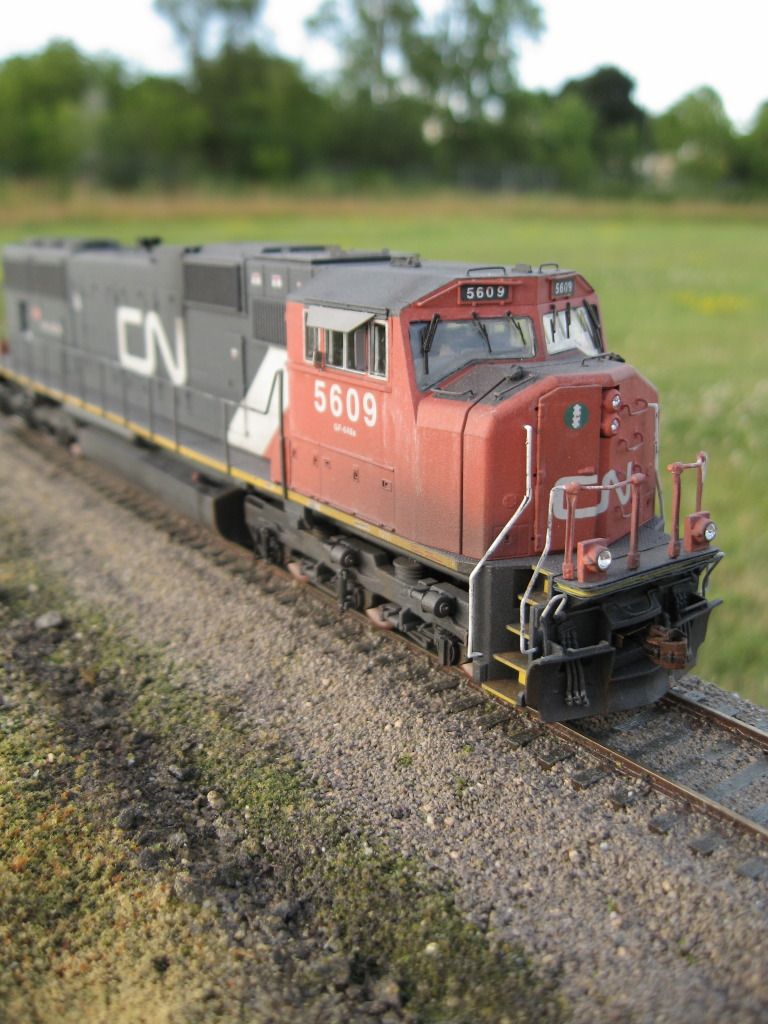
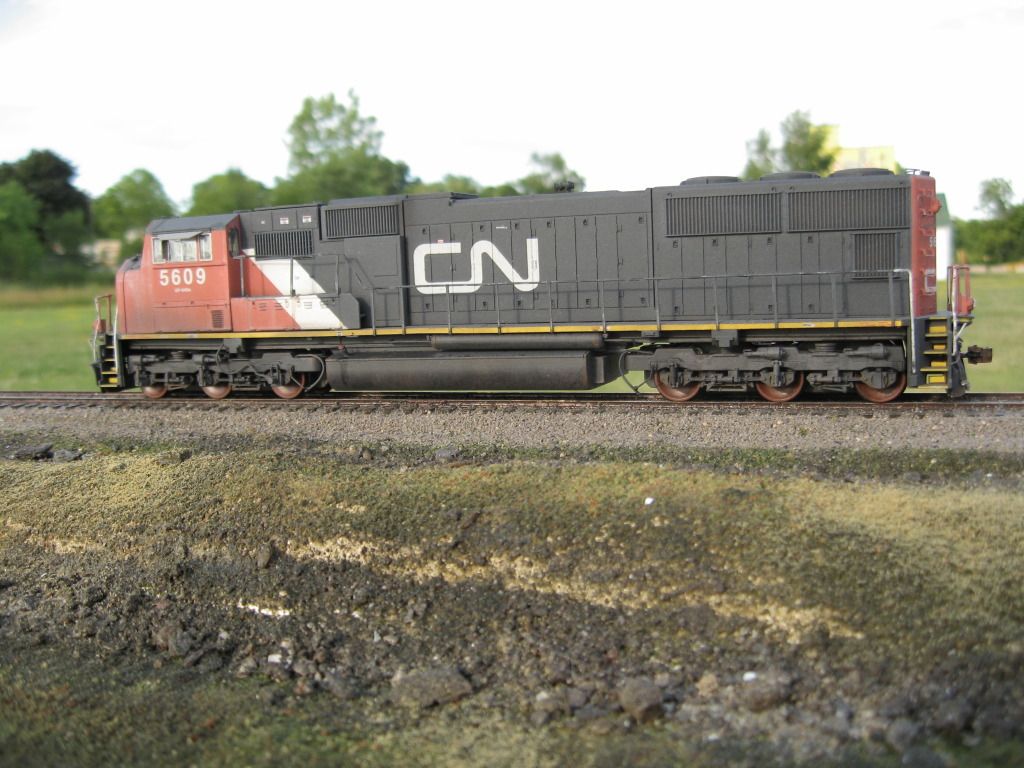
CNR SD70i #5609

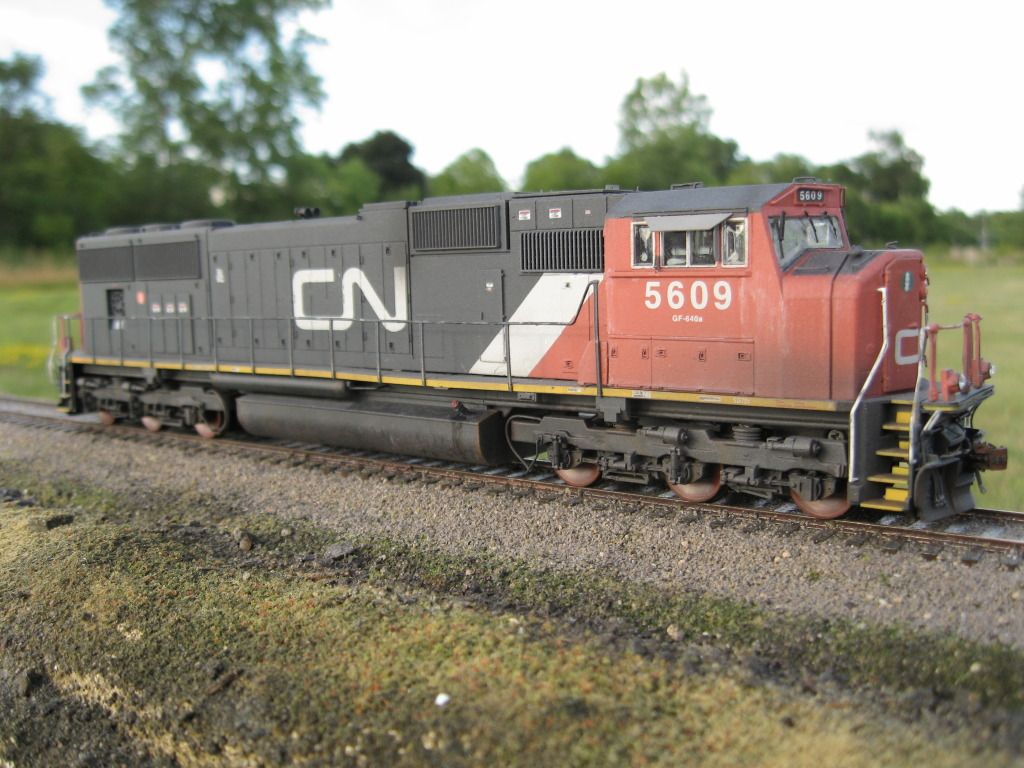
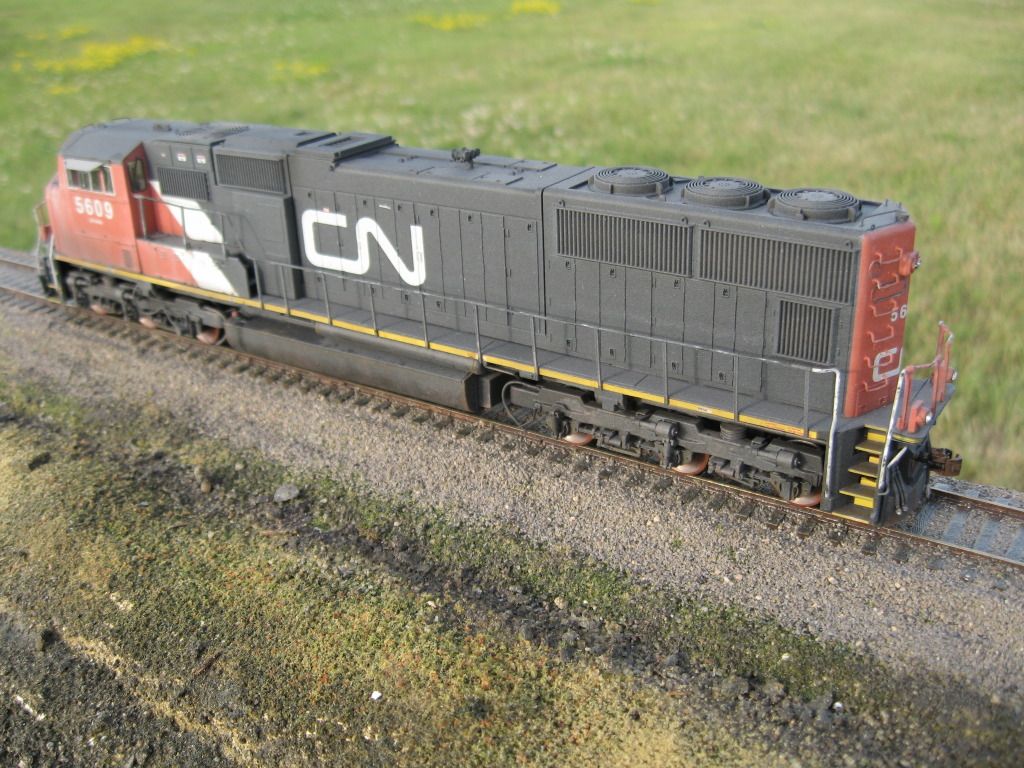
Representing a small but unique order for SD70s, CNR's SD70is were the only isolated cab SD70s produced worldwide, and represent a fraction of their SD70/75 order.  This unit started life as an undecorated Athearn Genesis SD70i.  These units represent the mainstay of CNRs hot-shot mainline fleet in the late 90s and early 2000s, just around the time the C44s came on line, as well.


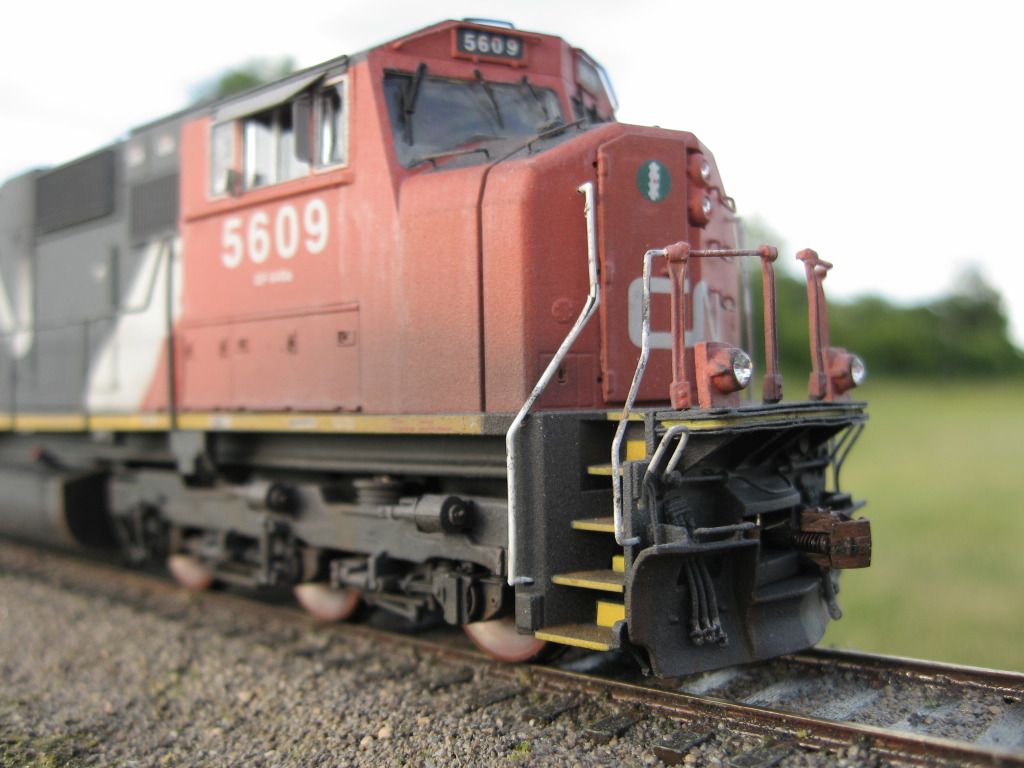
As I began field research for this unit, I realized I had to undertake a few scratch building projects to render and authentic replica.  For starters, the anticlimbers that adorn both the front and rear pilot faces were built from styrene stock, as there are no available replicas.  They are made of 7 layers of different thickness styrene stock, cut from a template made using the contour of a Miniature by Eric CNR Anticlimber.  The usual array of hoses, coupler cut bars and ploughs have also been attached to this model.  A custom rear pilot was fashioned from a Juneco CNR pilot, using a mill file.  The ditch light castings are Details West, and the Pyle headlight on the cab was removed and replaced with the superb casting by Details Associates.


As is standard with all Genesis Line Athearns, the unit's shell was very well executed.  Even the dynamic brake grills are see-through and the photo-etched 48" fan comes included in the model.  The front door casting is too thick, to allow for positioning.  Using a mill file, a thinned it out and filled the window opening prior to installation.  Custom front and rear railings were fashioned from Smokey Valley stanchions and hand-bent phosphor-bronze wire.  Otherwise, stock railings were used .  The sunshades are a wonderful product from Railfyer Model Products.  The horn and antenna castings are by Details West.


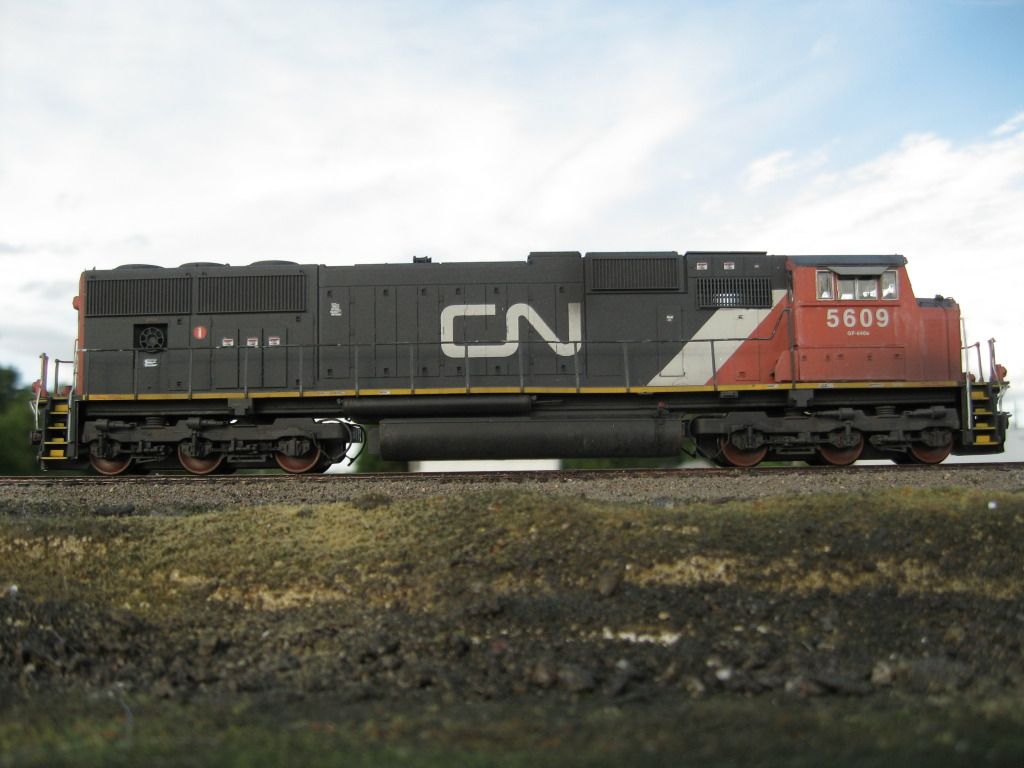
 The most time-consuming modification was the waste retention tank, located aft the fuel tank. Of course, the cast chassis had to milled down to accommodate a shortened fuel tank casting. The retention tank was fashioned from styrene stock and scrap fittings.  Sand lines were installed using a realistic, but rather finnicky setup.  It has proven to be fragile and I'm contemplating refurbishing them, along with adding brake lines.


The unit was painted with Acrylic paints.  Trueline Trains CNR Red/Orange #11 and Testor's Gloss black fit the bill.  Microscale decals were used to decorate the unit.  I really think that the warning and data decals add so much realism to the unit, well worth the time.  While it looks like I neglected to paint the sunshades, this isn't the case.  Just check prototype photos!


The CNR red/orange paint quickly started to suffer on these units, in real life.  I am not aware of any official reason for the severe and quick fading on the nose.  I suspect that the anti-slip paint on the nose, (which contains a gritty base,) started to wash off and damage the paint on the nose.  Another theory was the solvent used to clean the units adversly affected the orange tint.  The unit was weathered with dry chalks, dilute airbrush washes and dry brushing.  The streaking on the nose was achieved with extremely diluted "Dollar Store" acrylic white paint.

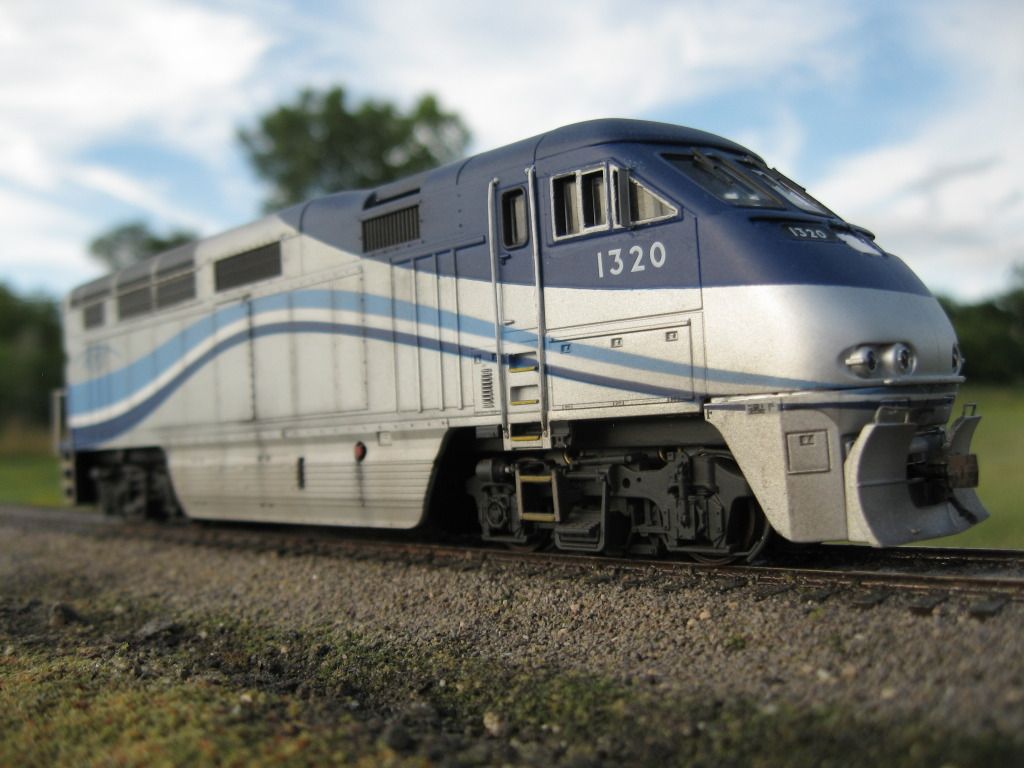
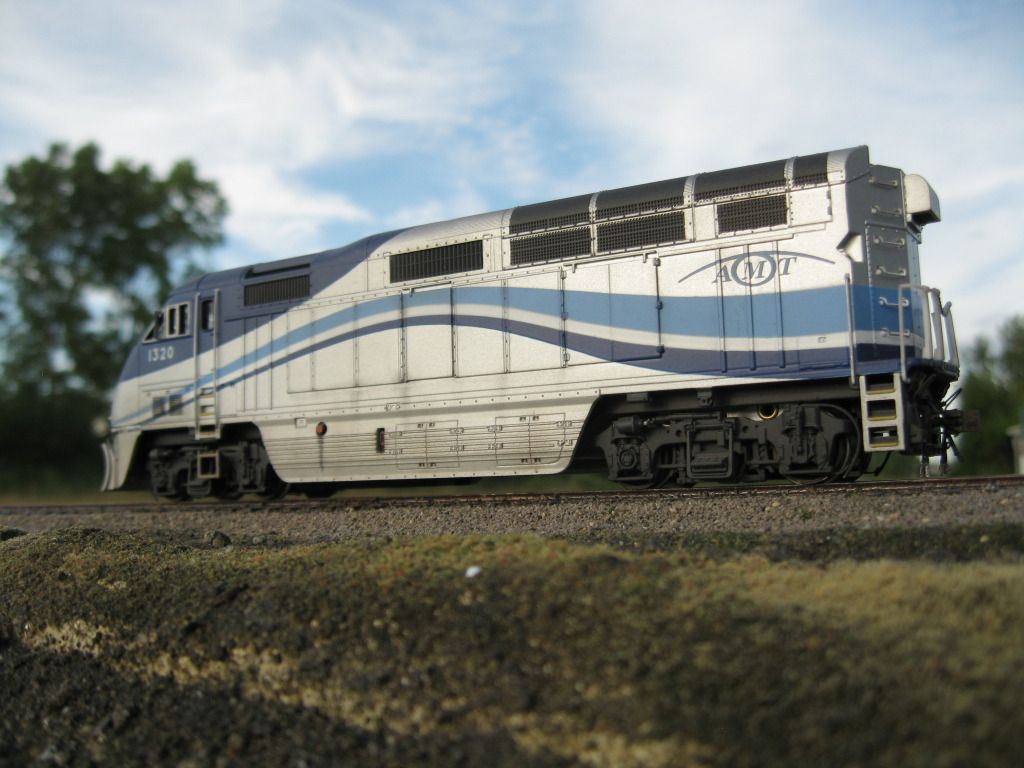
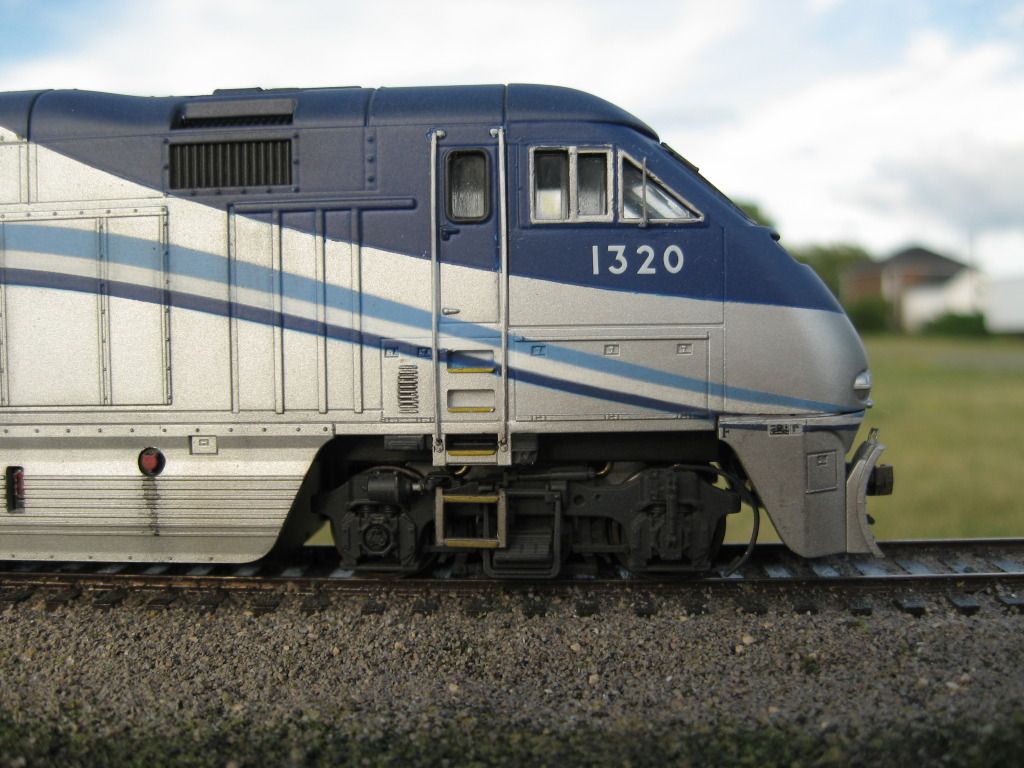
A.M.T. F59PHi #1320


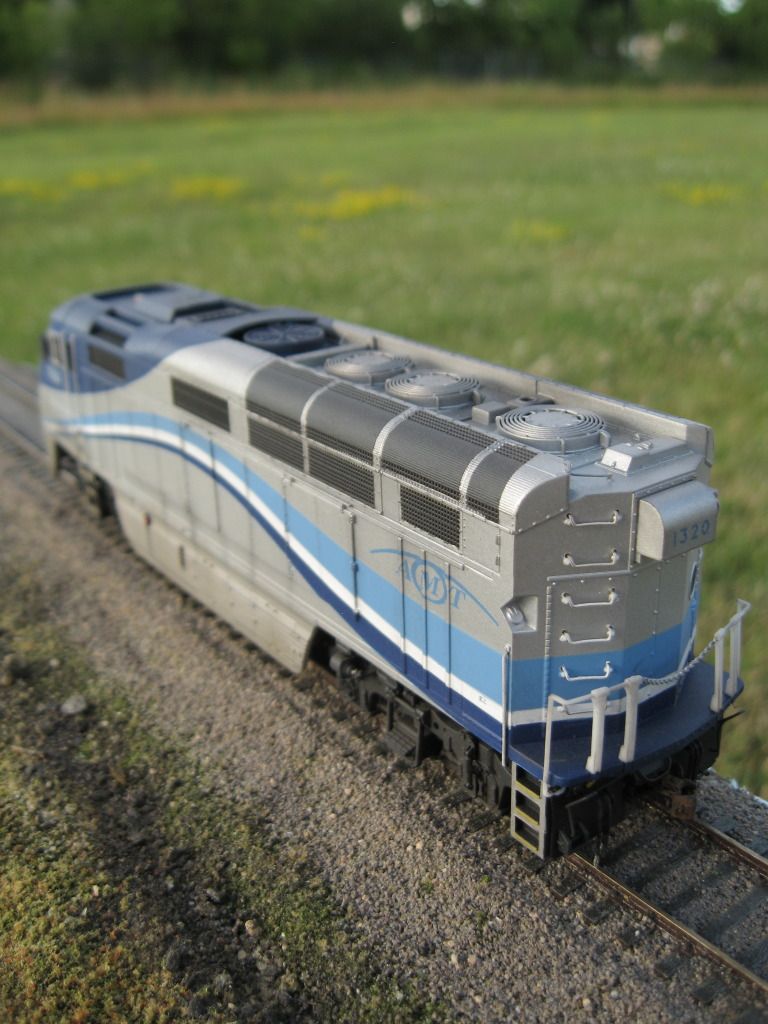
With the privatization of Montreal's surface commuter train service came a new image (Agence Metrapolitaine de Transport) and a much needed cash influx.  These EMD F59PHi were the first-ever brand new locomotive purchases for the service and were used to supplement and replace ageing FP7s, FP9s and GP9RMs.  On a side note-  Don't you think these units would have looked awesome with the GIANT circled arrow on the nose?


This unit is a factory-painted, limited run Athearn RTR F59PHi.  Details added include full pilot details, (such as train-line and M.U. air hoses, and coupler cut bars,) along with sand and brake lines on the beautifully executed Blomberg Ms.


Hand-bent wire grab irons and railings, along with Details West photo-etched wind deflectors help detail this locomotive. While the rear radiator grilles are well represented on the vertical hood walls, there is a total lack of detail on the curved and horizontal areas.  

Using photos for placement, I masked off the appropriate areas and airbrushed them with a grimy grey/brown.  I am fairly pleased with the effects, but perhaps a decal overlay to represent the grille-work would really "ice the cake.


Finally, for a light weathering effect, dry chalks were sealed in with dull-coat to obtain a well maintained finish.  Dry brushing was used to represent fuel spillage and to rust the couplers and wheel faces.


2011-12-27

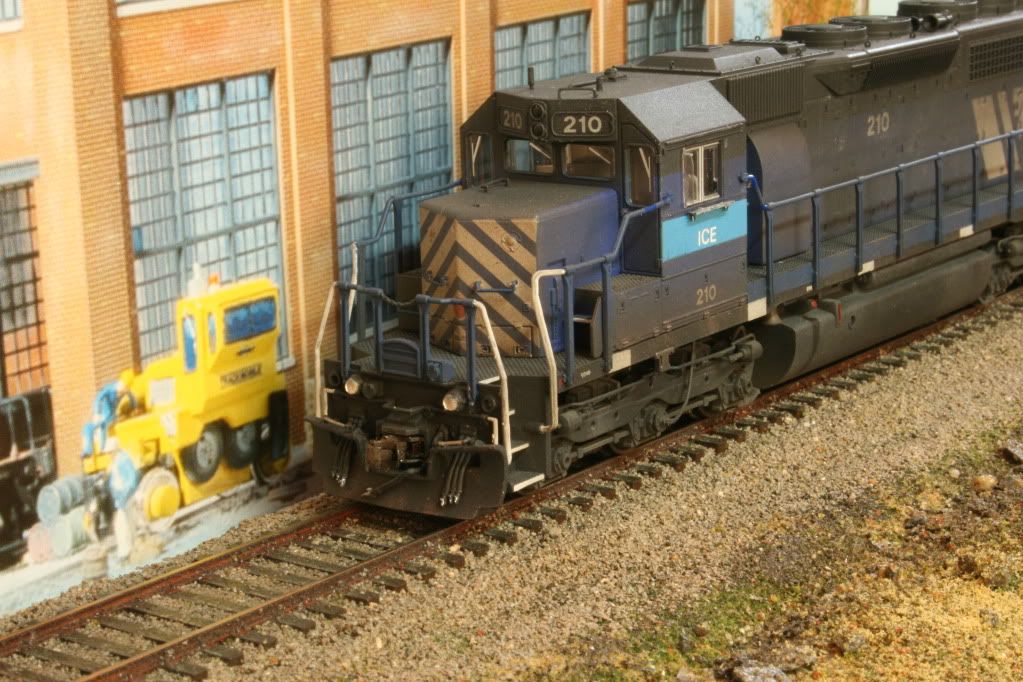
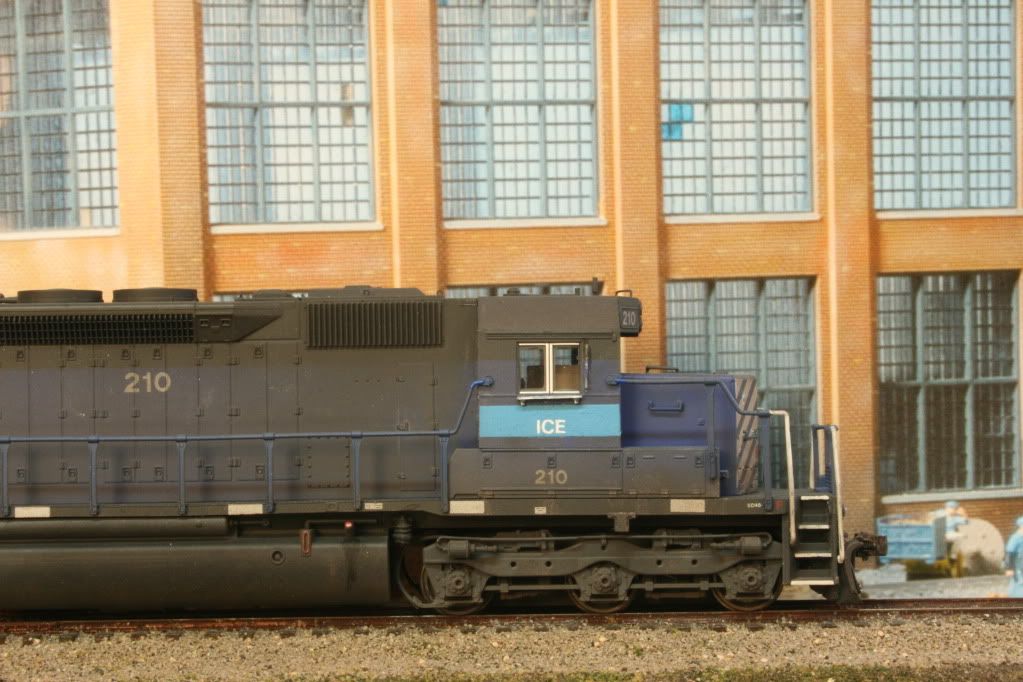
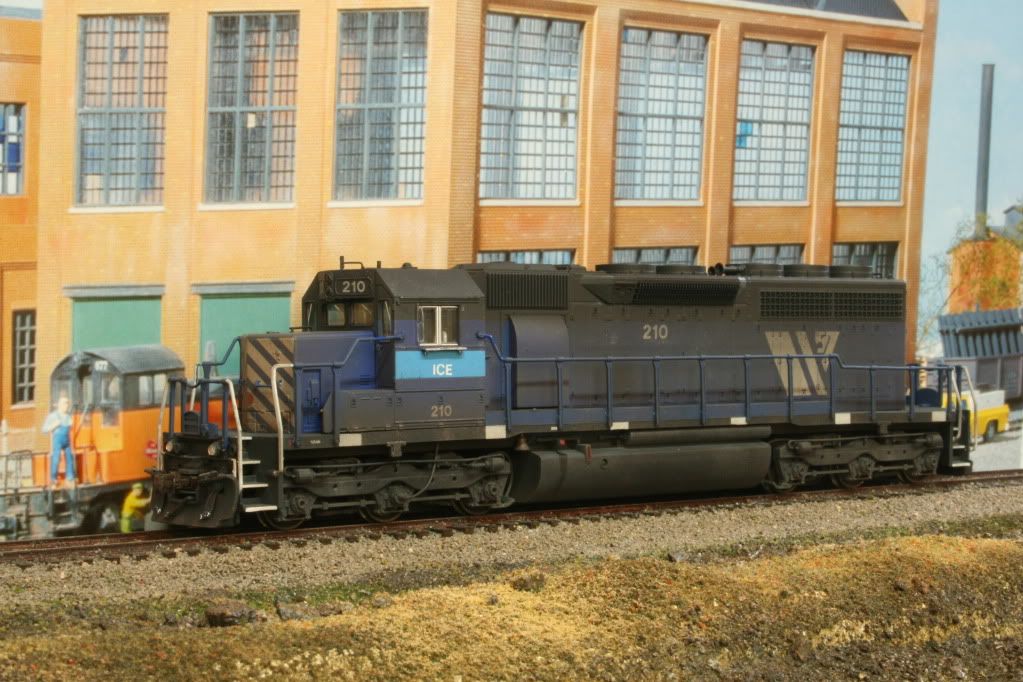
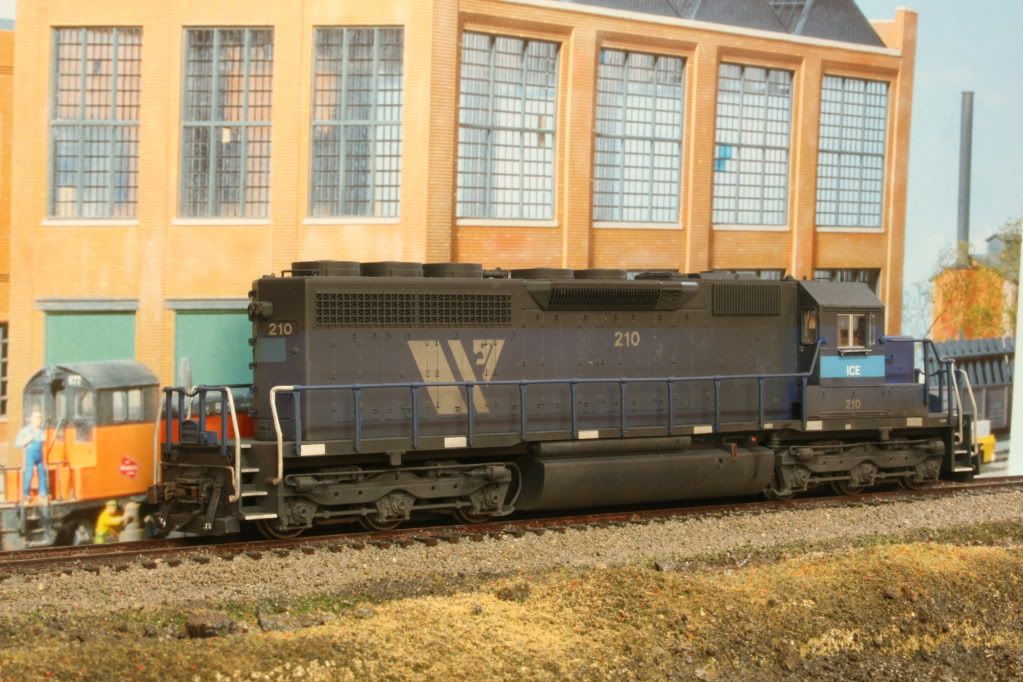
(A facelift for) Iowa, Chicago & Eastern SD40 #210

A Kato SD40, this unit was painted and weathered by another custom builder in the Toronto area.  Not satisfied with the results, it was sent to me by it's owner, Nad, who has been gracious enough to let me display photos of the refinished result.  

The pilot faces were heavily re-worked, with scratch built lift tabs and MU receptacles.  Details West supplied the MU and train line hoses.  The plough is a recycled Walther's Trainline accessory, with a reshaped profile and rivets added along the bottom edge of the blade.

Three scratch built rooftop antennae were made.  Two are "firecracker" style and one appears to be a GPS satellite dome.  All were made with an assortment of wire and styrene stock.
Sand line brackets and hoses were added to the truck sideframes, along with an air drying filter just ahead of the fuel tank. A Details Associates speed recorder adorns the fireman's side front sideframe.
Roof top lift rings were added, along with cab arm rests and wind deflectors.  The cab was actually totally repainted and weathered to match the rest of the locomotive.  The "ICE" under the cab window are from Woodland Scenics dry transfer set.


The walkway and handrails were repainted to match photos of the prototype unit.
Kadee #58 scale couplers finish this fine unit off.  The weathering was achieved with the usual array of chalks, eye shadows, and dilute wash paints.