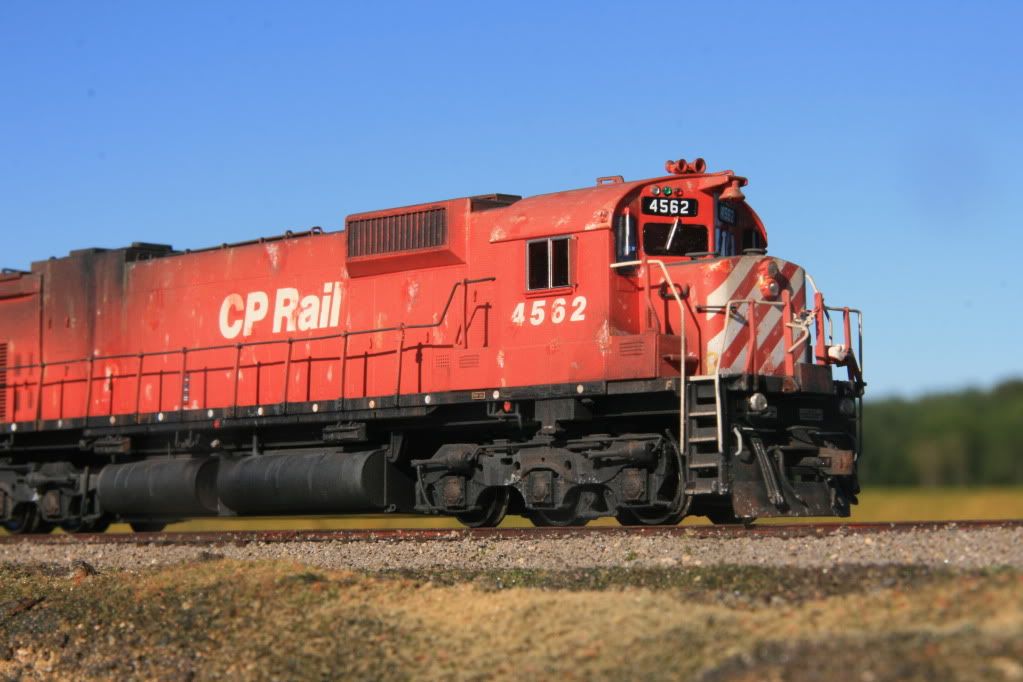
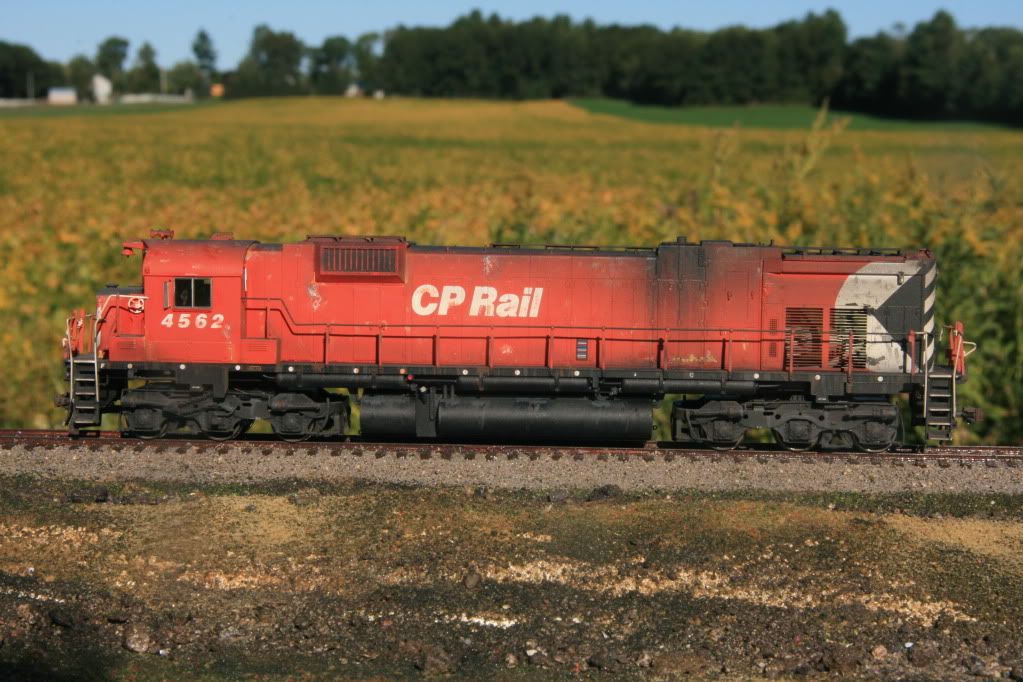
I must have a thing for those 3-window cabs. This is a heavily kit-bashed Athearn "RTR" SD60 with Details Associates cab.
I remember seeing these beasts first appear in the late 90s on CPR property in Montreal and Smith's Falls, ONT. They were the "newest" motive power on CPR at the time. They also represent the final units to be painted for the Soo Line. Since their delivery, Soo Line has been absorbed by it's (long time) owner, Canadian Pacific.
This unit represents a fair amount of kit-bashing. The cab was assembled from about 10 pieces. The steps were replaced with A-line etched brass, see through items.
The anticlimbers were salvaged from a scrapped Proto2000 SD60 walkway. The plough, MU and train-line hoses, ditch lights, and speed recorder are Details West items. The coupler cut bar and brackets are Details Associates items. I believe these details, with their fine cross-sections, are essential for making a model look like the prototype by providing a sense of "bulkiness" to the whole unit.
The winterization hatch is a fine plastic casting made by Details Associates. They include a photo-etched steel grating for the opening, which captures the look of the prototype perfectly. The handrails are made with Smokey Valley stanchions and hand-formed railings. The fire-cracker antennae were scratch built from spring steel and styrene stock. The horn is the stock Athearn unit, but relocated. Finally, the flush-mounted windows were hand-cut from clear acetate. A time-consuming, but worthwhile venture.
The unit was painted with Polly Scale "Soo Line Red" and Gloss Black. The unit was weathered with a mix of dry-brushing, dilute sprays, chalks and eye shadows. The decals, (including the excellent diesel data decals,) are all produced by Microscale. Kadee #58 scale couplers finish off this EMD unit.
2011-10-09
CEFX SD40 #3192
I believe this unit was intended to be an Espee or Santa Fe unit, as evidenced by the cab Details Associates A/C unit, Details West antenna stand and large plough. The horn has been relocated with a custom stand. A-Line wipers and Details Associates ditch lights add fidelity to this elegant lease unit.
Truck sand lines and a speed recorder were added, along with full gas tank details. The unit was painted with custom-mixed Tamiya Acrylic paints. Decals are by Heral King. The weathering was achieved with chalks, eye shadows and dilute airbrush sprays. Many thanks to Dave for allowing me to post this unit on my blog.
2011-09-22
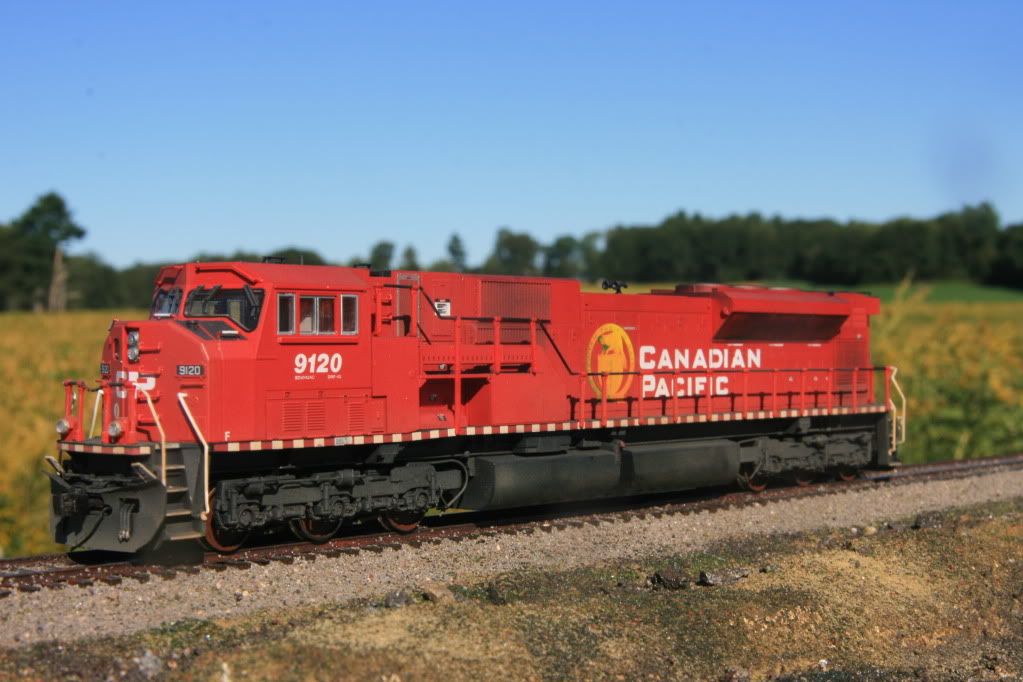
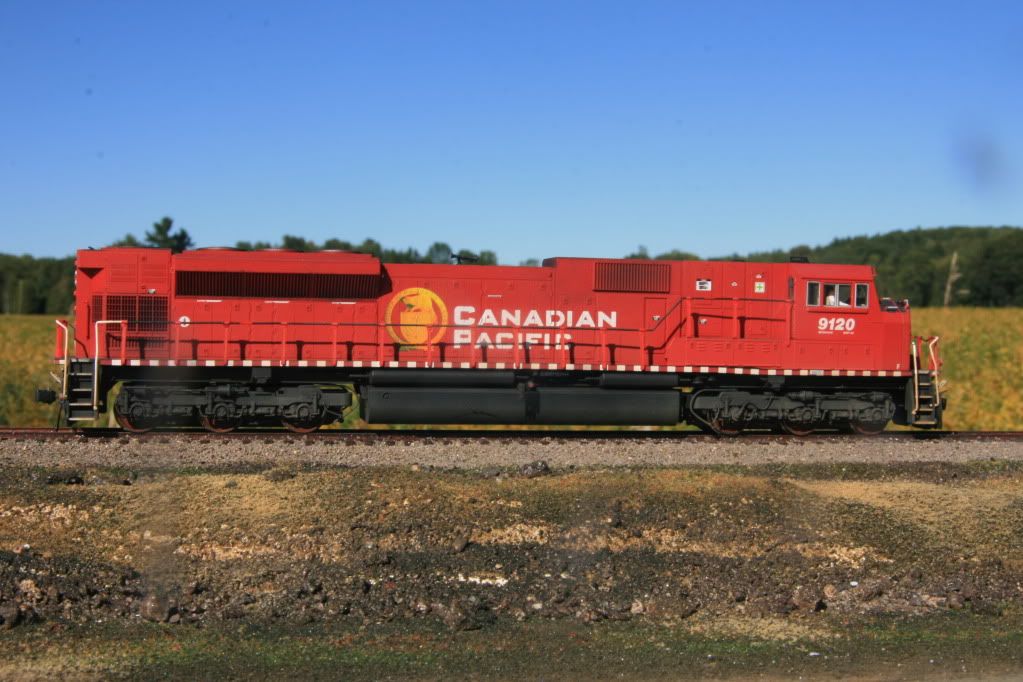
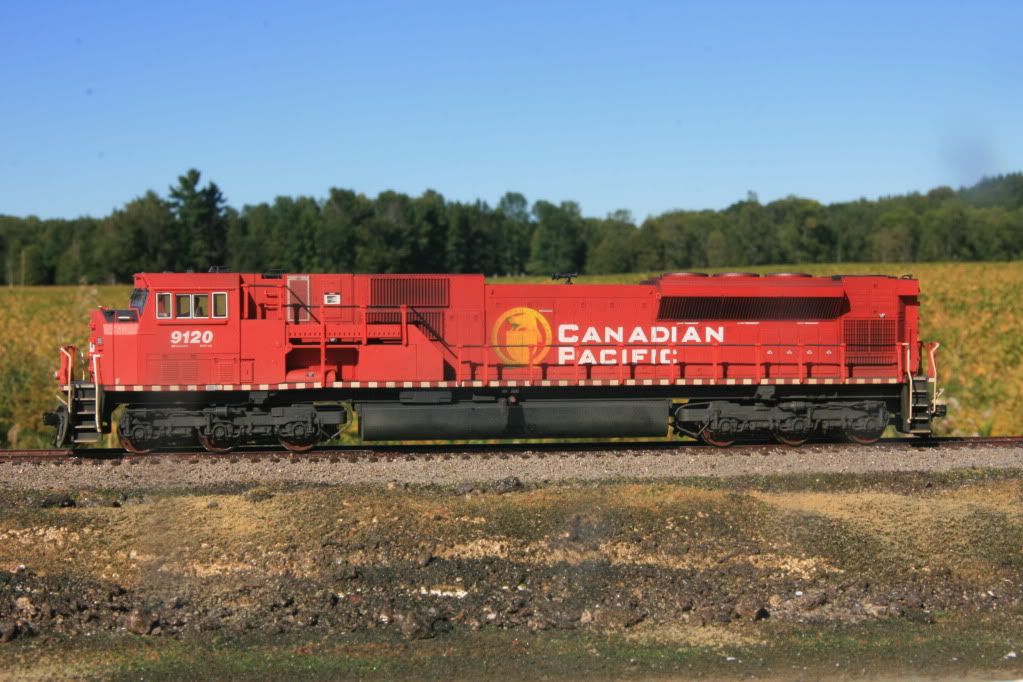
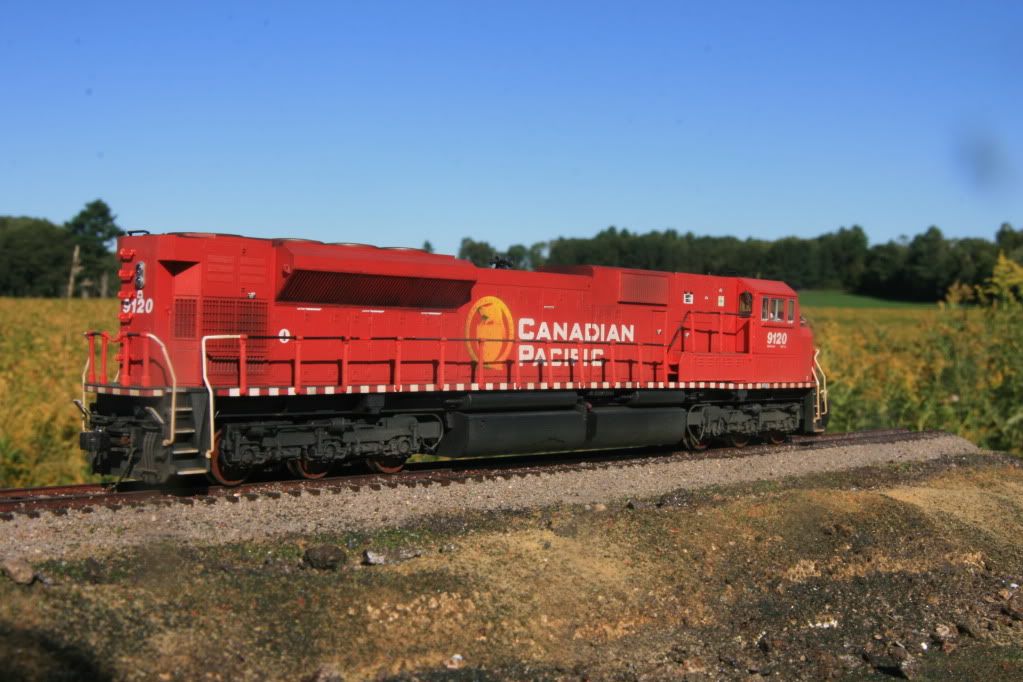
CPR SD90/43MAC #9120
Kato produced this HO scale unit on a limited-run basis many years ago. I picked it up in Chicago in 2002. It performs beautifully, and, as the CPR sidelines these relatively young units, I am happy to have an unexpected collector's item.
The prototypes of these units were produced by EMD in London, Ontario. They were intended to be "upgradable" by the railway. However, reliability problems led these units to be stored as "surge power" and also curtailed any further EMD purchases by the Canadian Pacific.
The model came well painted and detailed. Having said that, Kato chose to mount the ditch lights on the pilot face. This is incorrect for ANY SD90/43. I replaced them with Details West deck-mounted style ditch lights. Among other upgrades were Details West plough, M.U. and train-line hoses. Hand-formed truck sand lines decorate the sideframes. Lastly, a Miniatures by Eric horn sits atop the long hood. The unit was weathered entirely with dilute airbrush sprays. The unit was made to look "new" as my operating era ends shortly after their delivery to the C.P.R.
The prototypes of these units were produced by EMD in London, Ontario. They were intended to be "upgradable" by the railway. However, reliability problems led these units to be stored as "surge power" and also curtailed any further EMD purchases by the Canadian Pacific.
2011-08-16
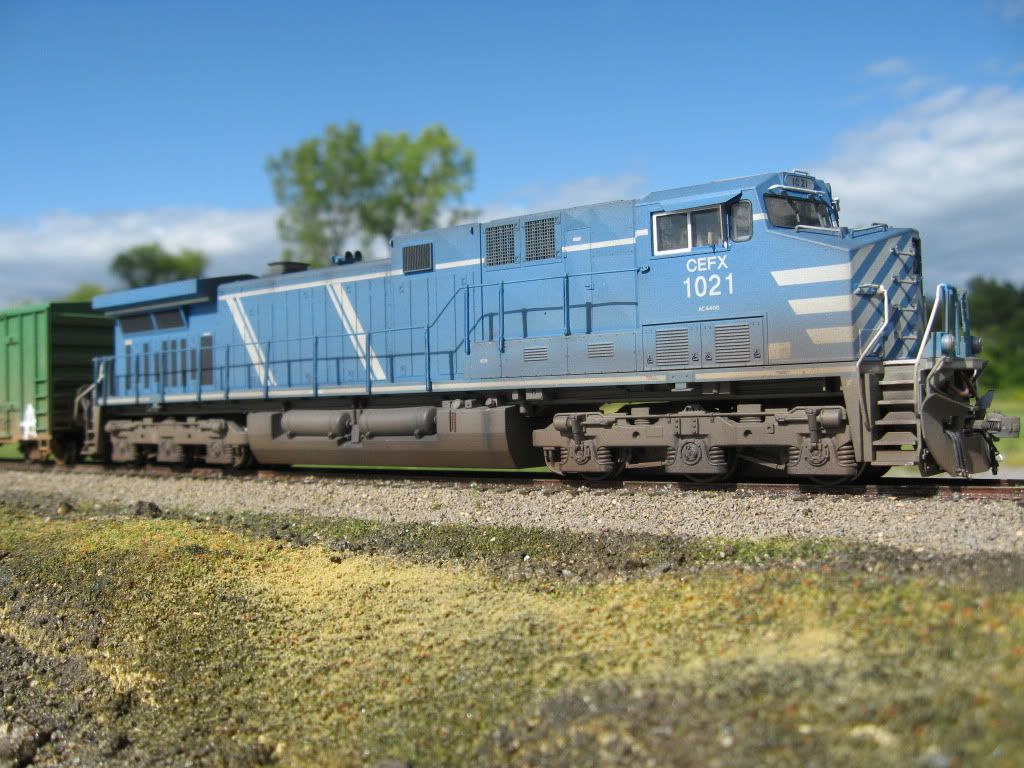
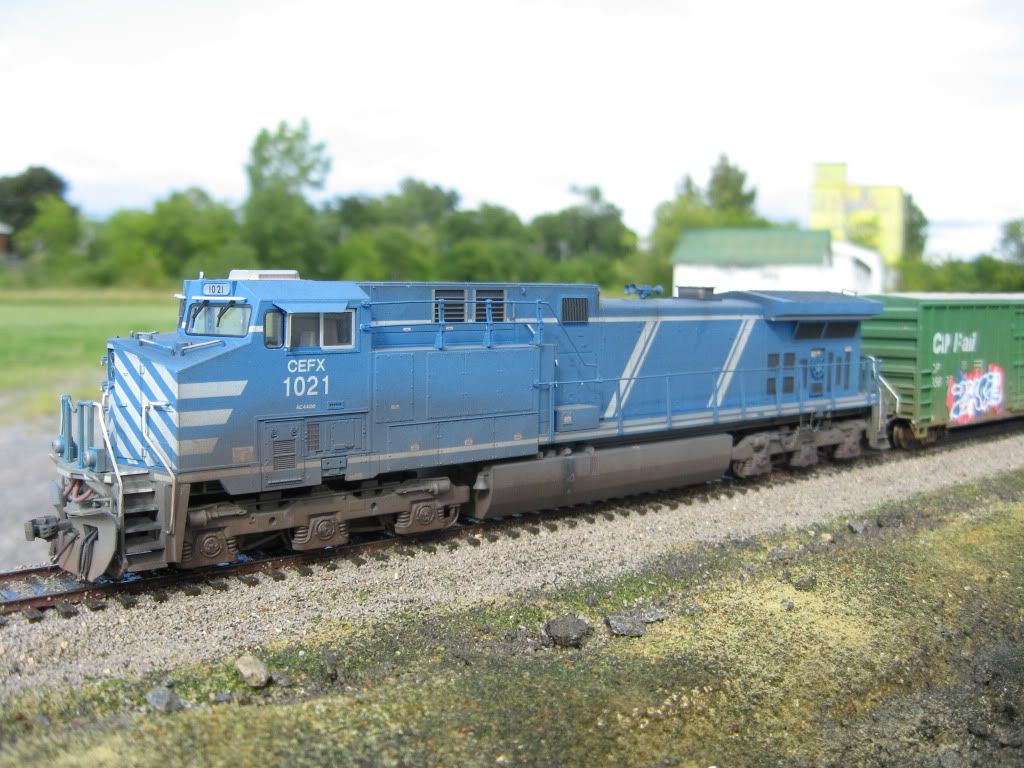
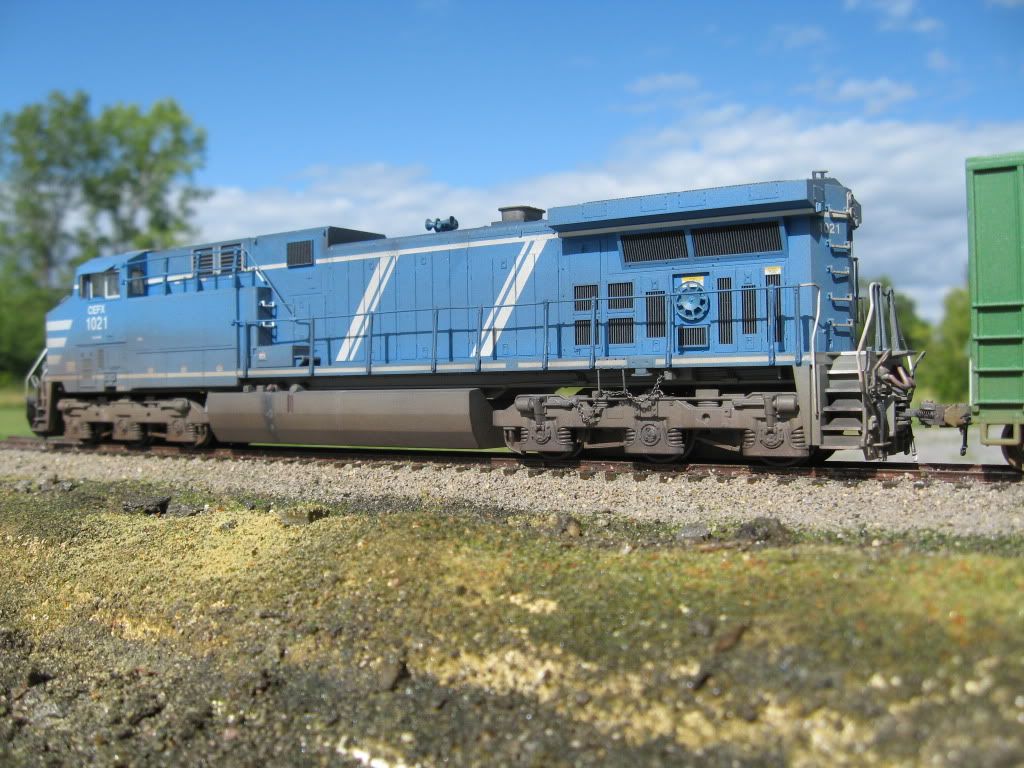
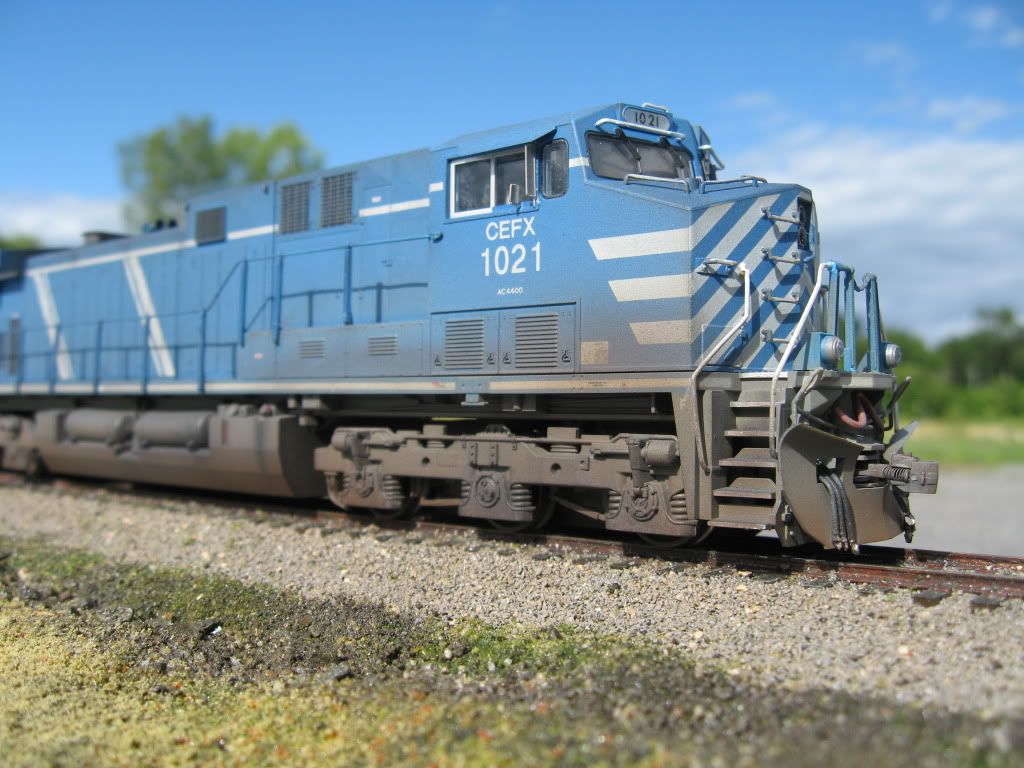
CEFX AC440CW #1021
I was contracted by a client to add prototypical details, such as a new horn (Miniatures by Eric) as well as replacing the long hood handrails with Smokey Valley brass stanchions and hand-formed wire railings.
The brake chain rigging represents my first (successfull) attempt at using scale chain links. DURING the installation... I wanted to throw in the towel and close my business, in shame. AFTER installation, I'm very pleased that I perservered.
2011-08-11
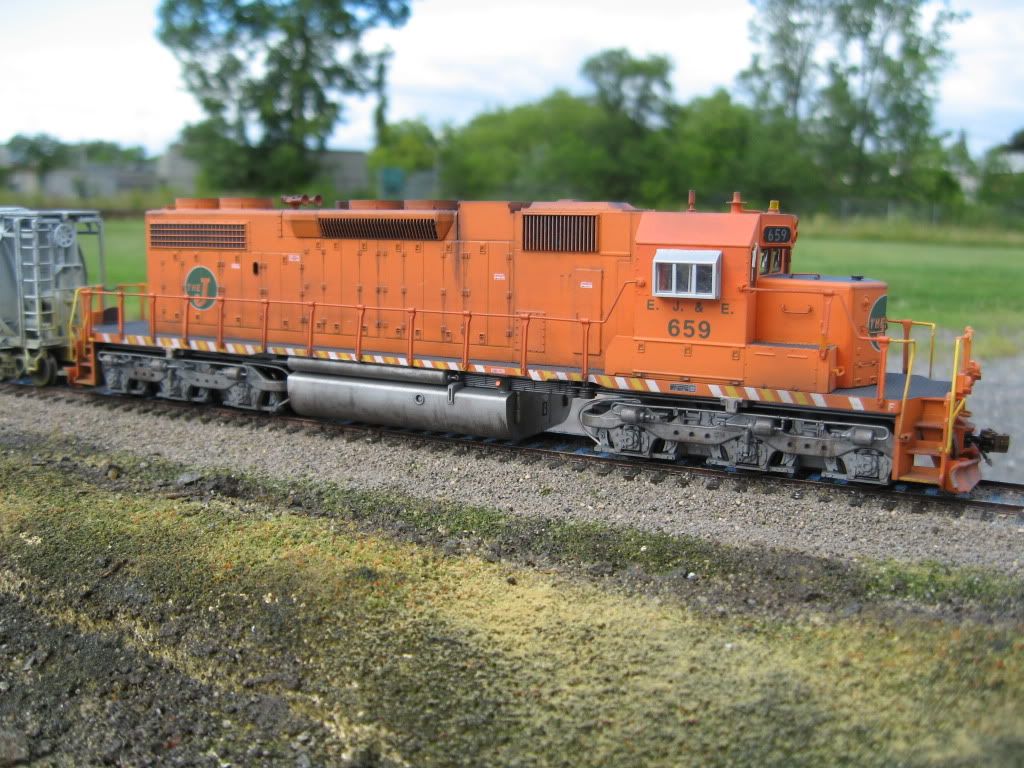
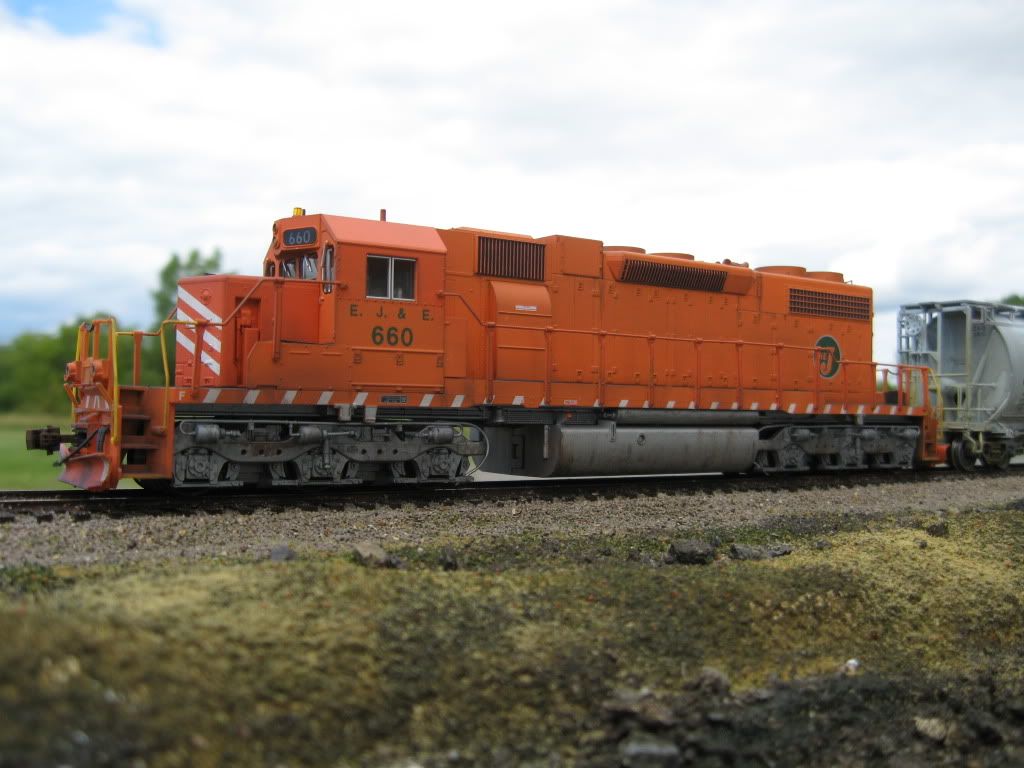
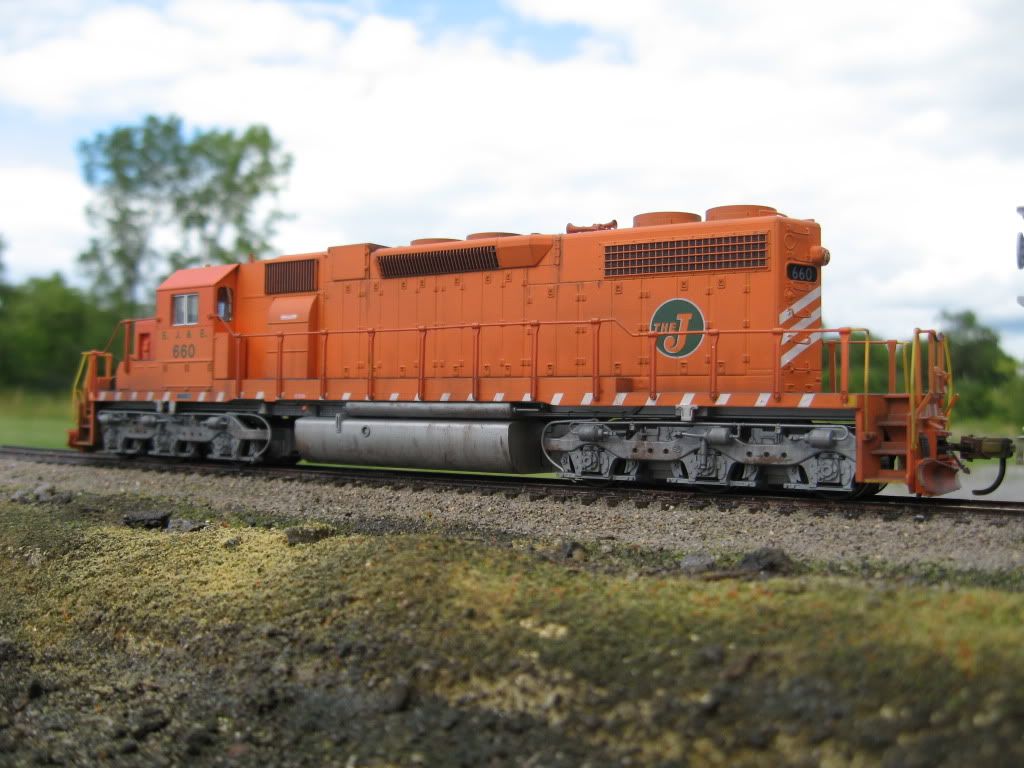
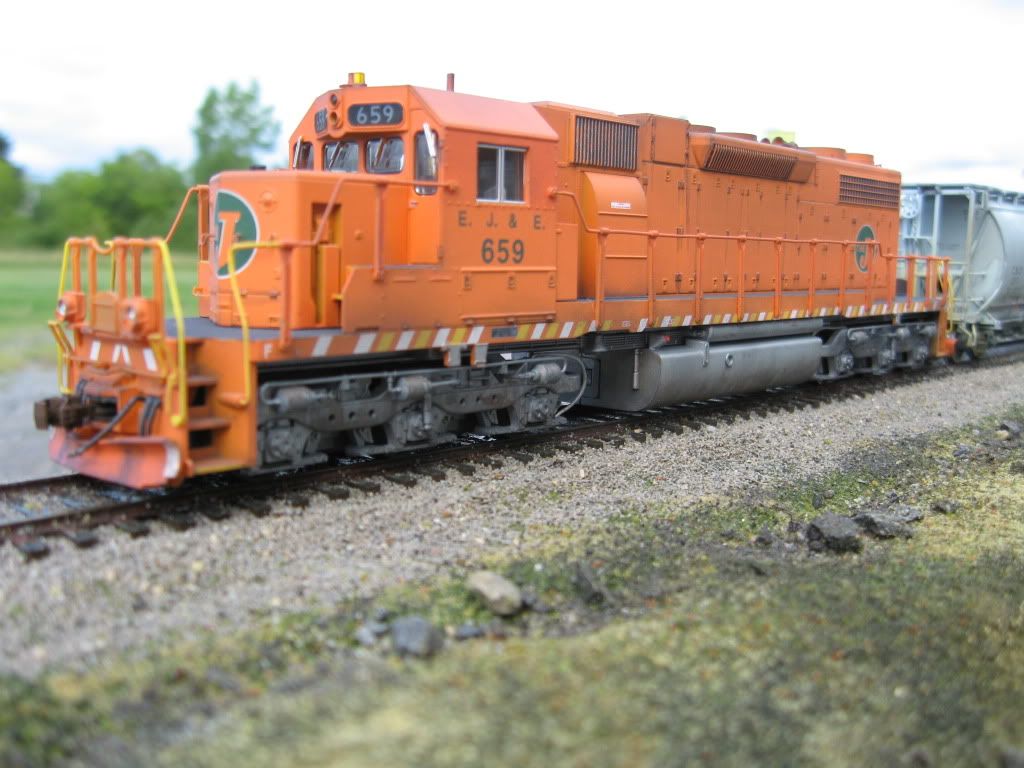
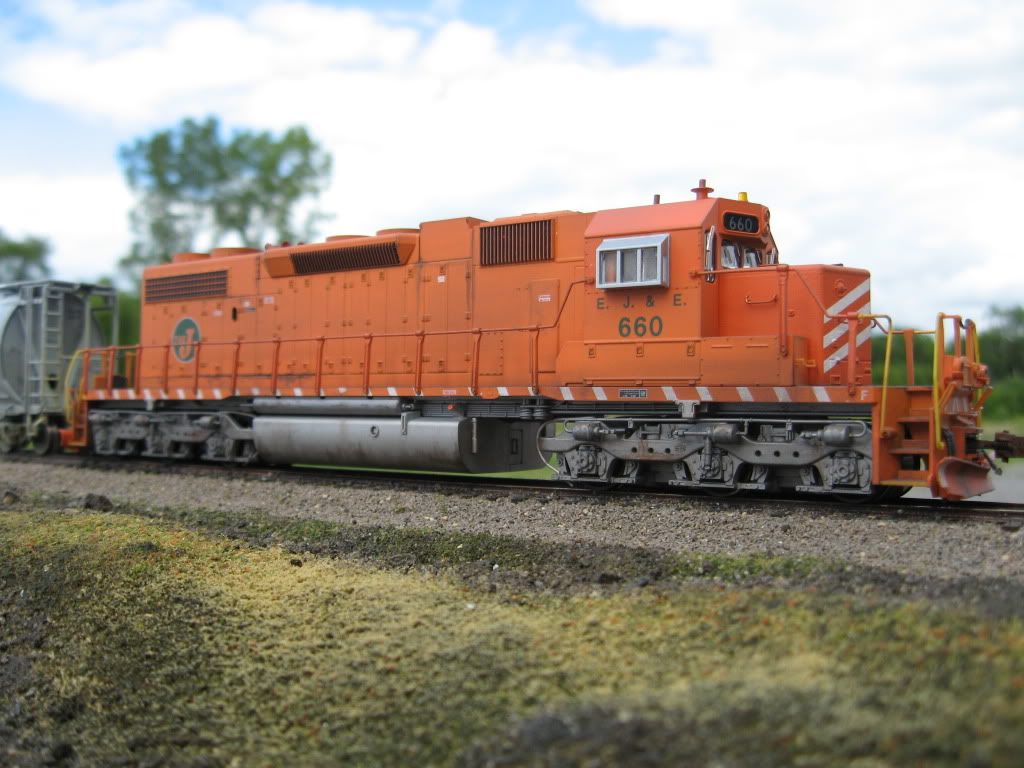
Elgin, Joliet & Eastern SD38-2s, #659 and 660
"The quality of Efram's work is exceptional. I'm extremely pleased with the final product - the units look absolutely fantastic. What was especially nice was the level of communication during the process - he kept me fully informed with regular updates on the progress of the job as well as making sure the work was done according to my specifications. I look forward to working with Efram again!"- Dave A.
The antennae and strobe lights adorning the roof were scratch built from styrene and wire. The ditch lights are castings by Kaslo Shops, sitting atop of small planks made from styrene.
Details West "weed cutter" ploughs help decorate the pilot faces. The only other detail that did not come with the Kato model were the Cal-Scale train line hoses.
The Kato stanchions were cut away from the stock handrails, drilled out with a #76 bit and had hand-bent, phosphor-bronze wire threaded through. Not only is this closer to scale, it is also much more resilient when being handled.
Microscale decals were used to add the chevrons, frame striping and data to the units. Unit #659 represents a unit in "transition," whilst #660 represents and updated paint job. When studying prototype photos, it became apparent that the frame striping wasn't installed at the same time as the chevrons. #660 sports the simplified white frame stripes.
Truck sand lines were formed from stripped, single-stranded electrical wire. The unit was weathered with chalks and dry-brushed acrylic paints.
2011-08-01
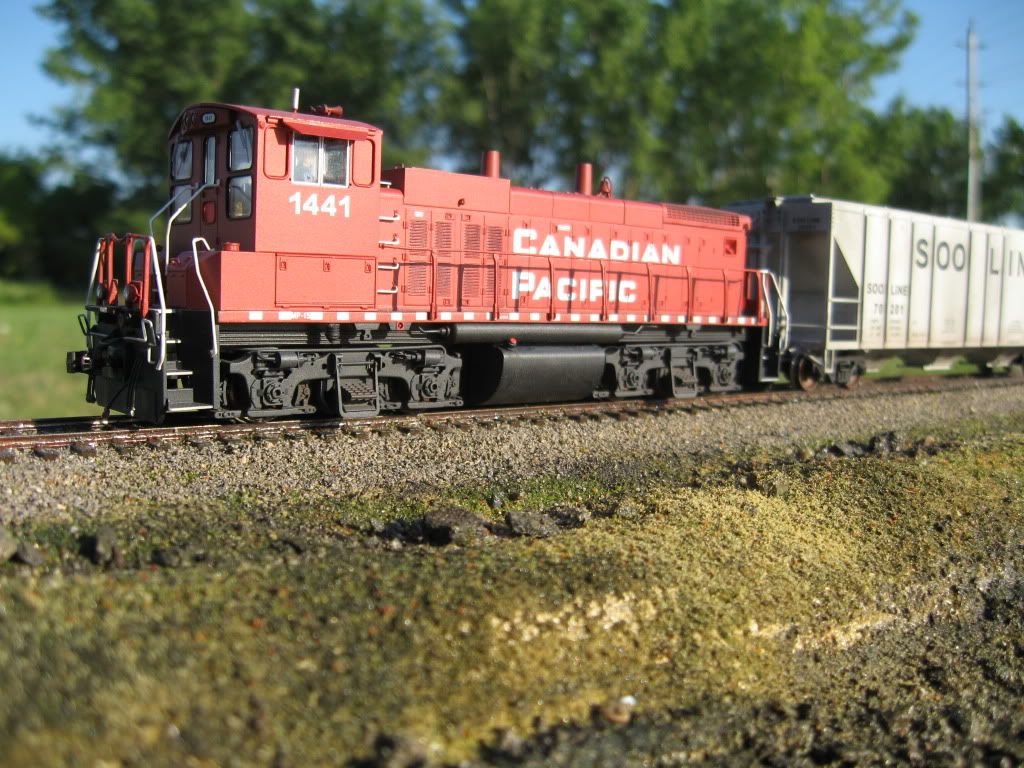
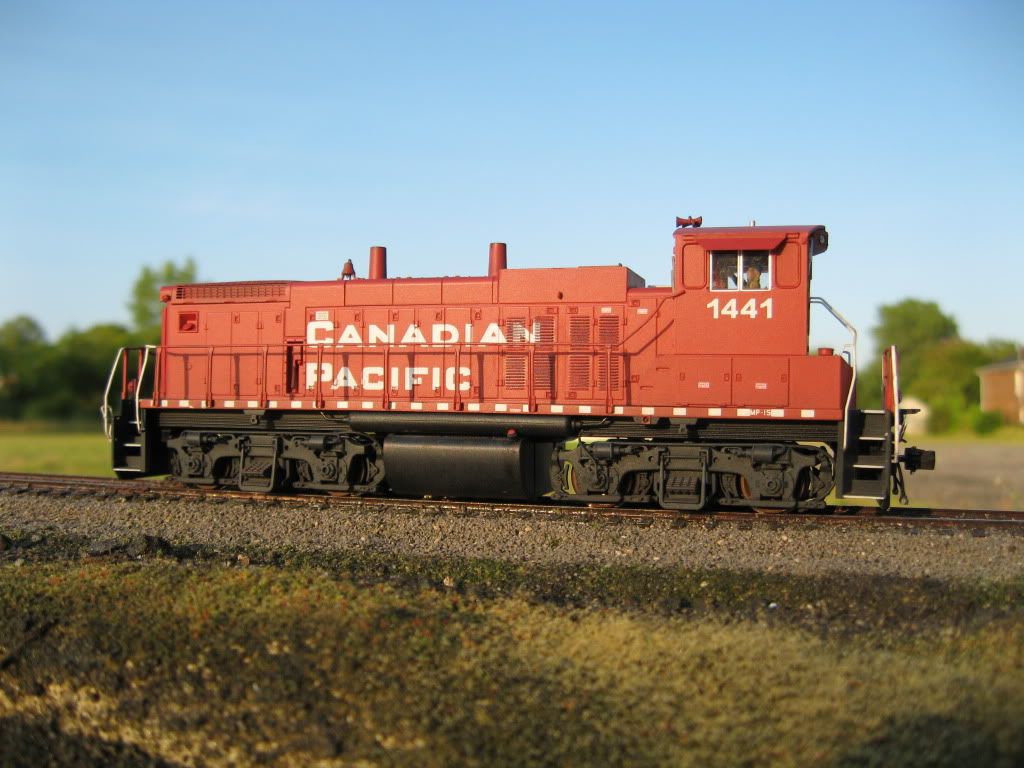
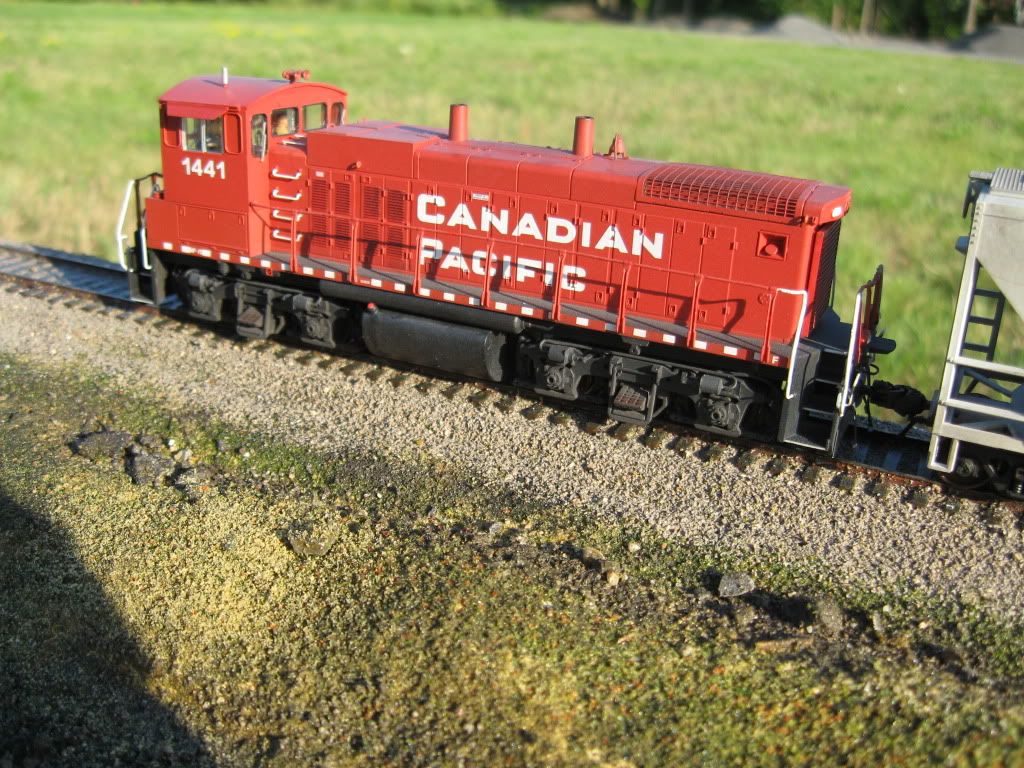
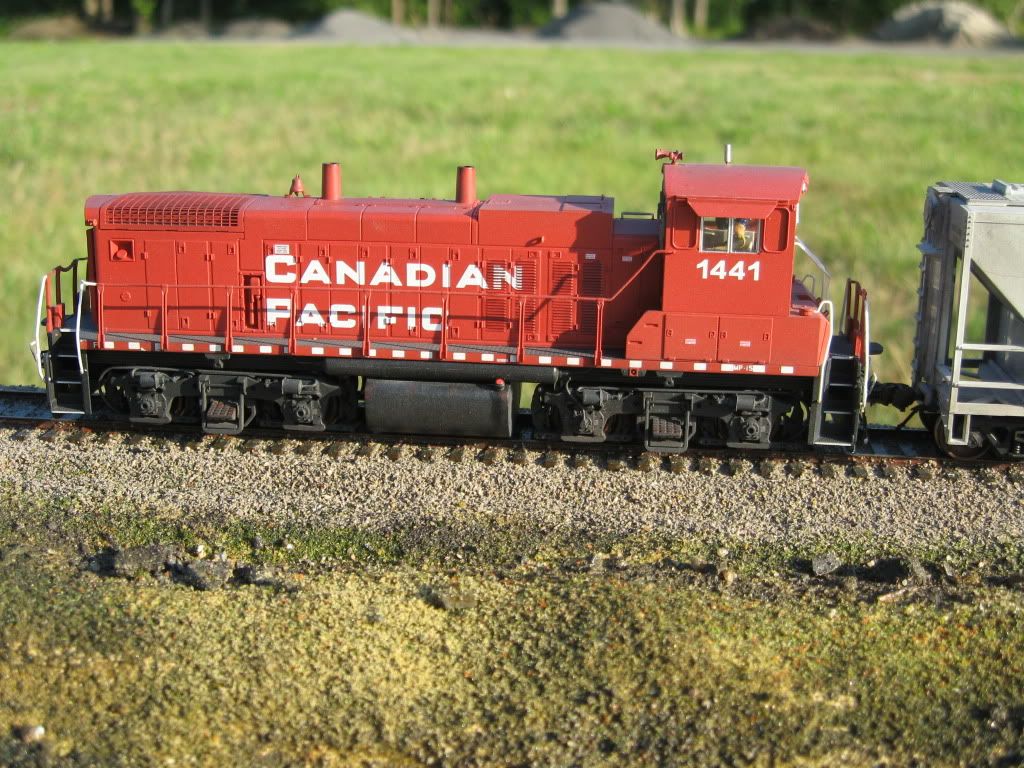
CPR MP15DC #1441
This unit is an Atlas model with DCC sound and lights, which came decorated as you see it. It's a beautifully executed model, but still needed some refining. My thanks to Nadeem, (the owner of the model,) for letting me post it on my blog.
The unit was weathered lightly, as these units likely seldom see road service, (as evidenced by the prototype's lack of plough and rear-view mirrors.) The majority of the weathering was achieved with chalks, sealed in with Testor's Acrylic flat clearcoat paint. Rust highlights on the leaf springs and fuel tank were achieved with dry-brushed acrylic paints.
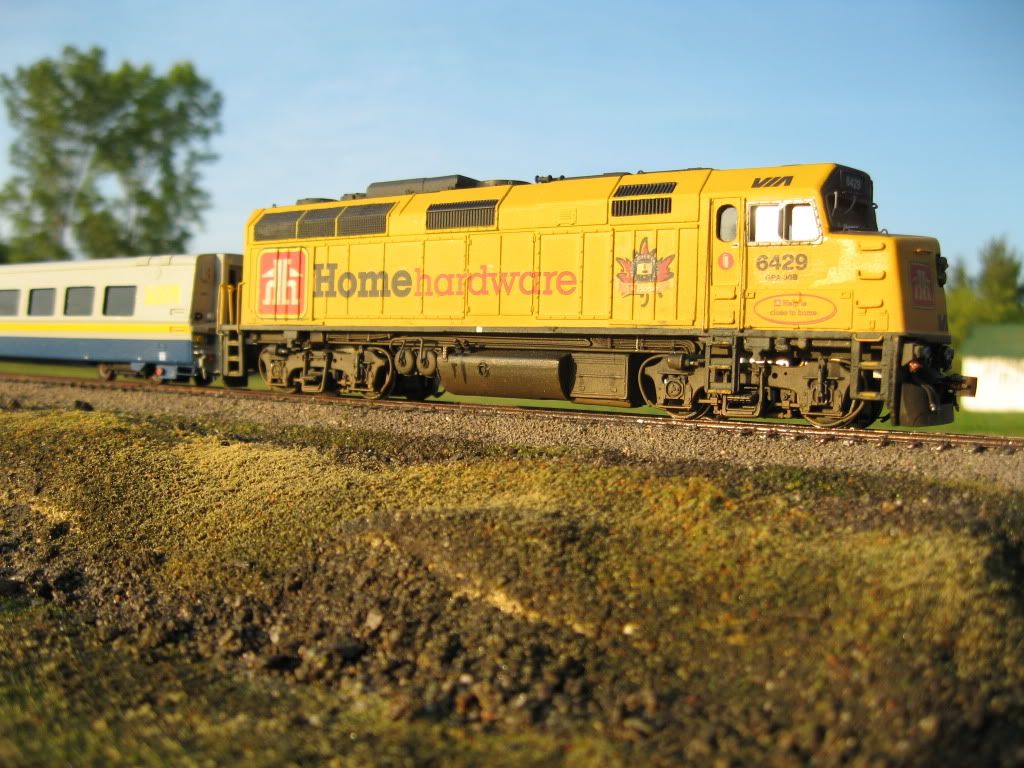
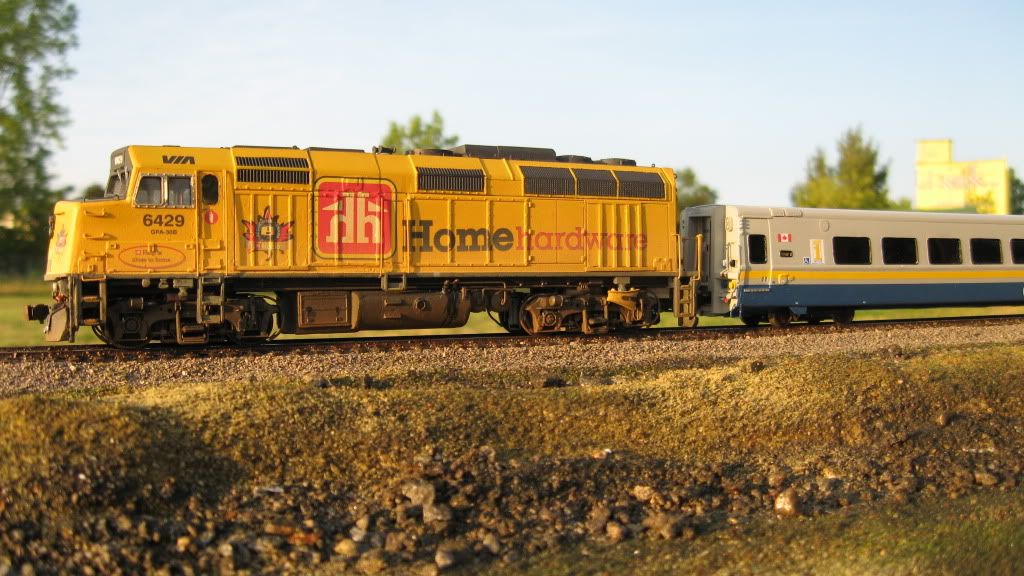
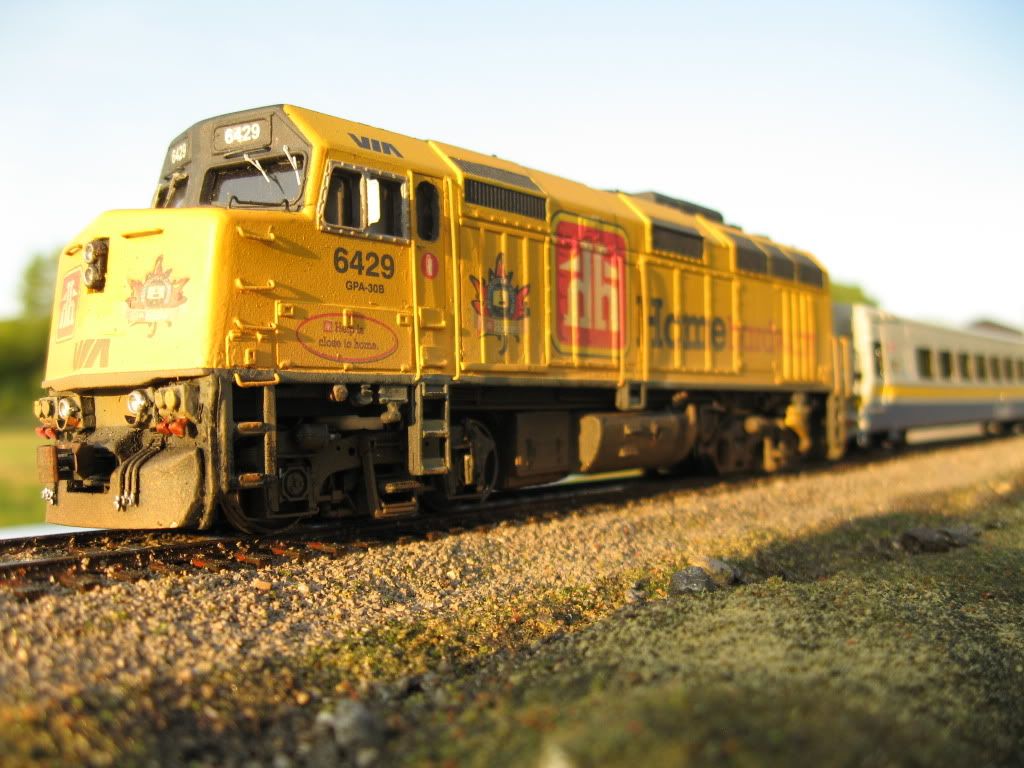
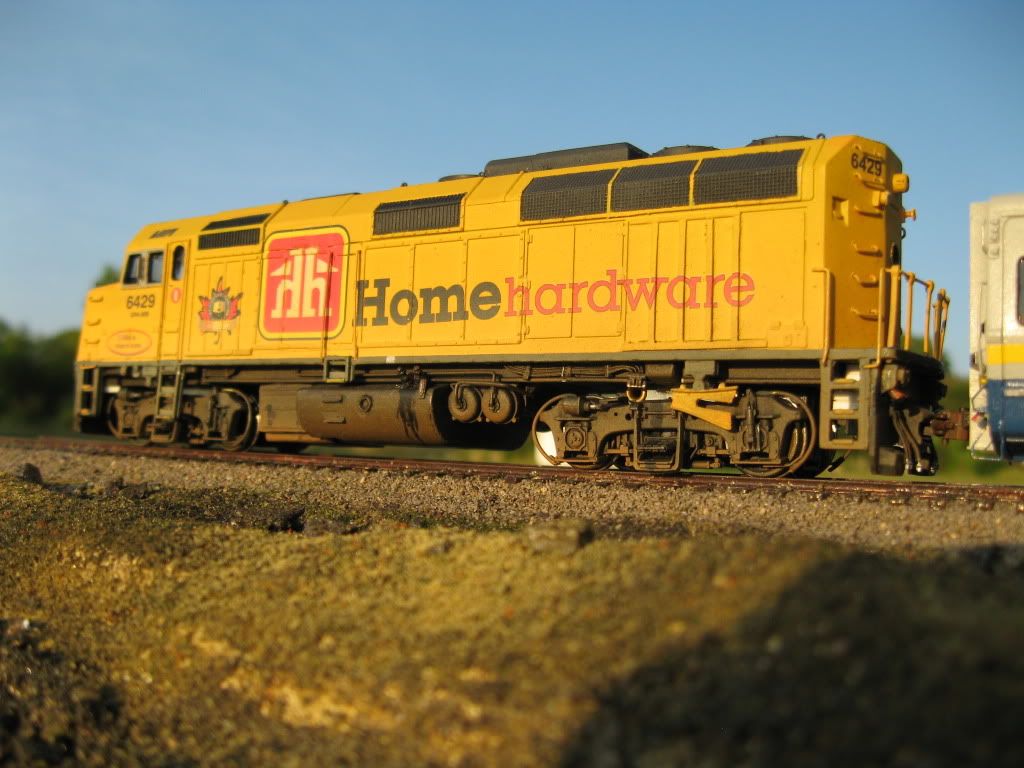
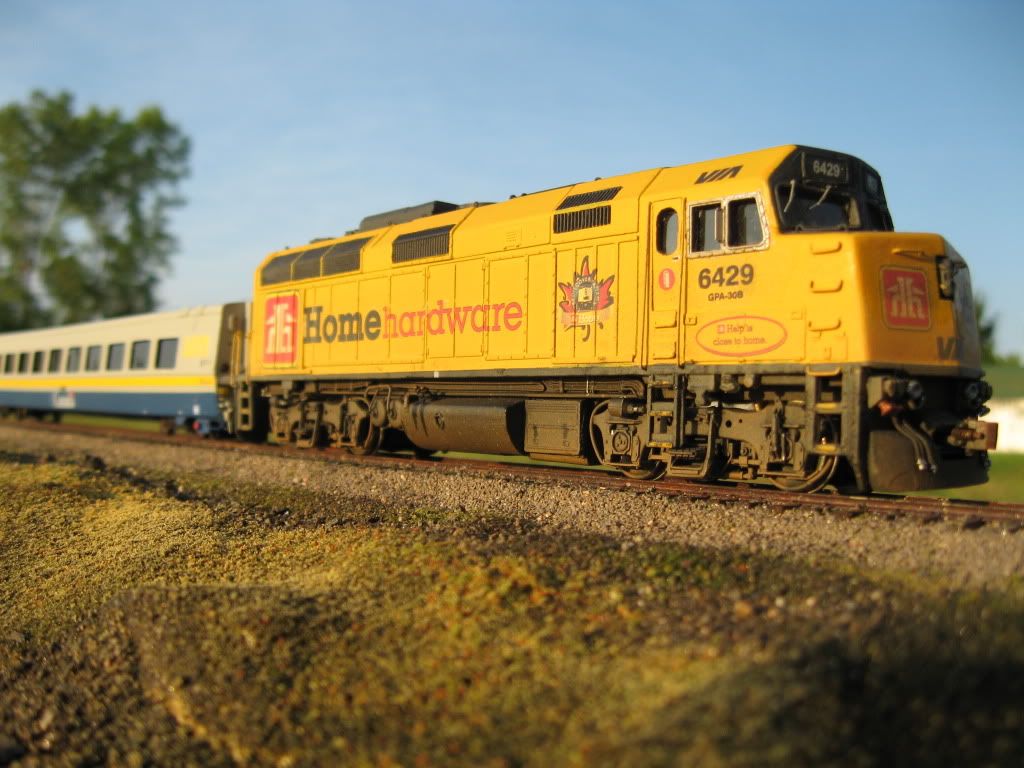
VIA Rail Canada "Home Hardware" F40PH #6429
This unit was built about a dozen years ago, and it was one of my first real attempts at custom painting and building. I am still quite happy with the results, despite missing or incongrous details. It was built using a Life-Like shell and heavily modified Athearn GP40 drive, with Train Station Products Blomberg M sideframes.
Noteworthy among the extensive modifications made to the shell is the relocation of the access door beneath the exahust hatch, done by carefully removing the entire panel from the shell, dressing it and rotating it's orientation on the shell. Tamiya body putty filled any resultant gaps. An extra vertical rib was added beneath the radiator grilles, and a new cab door, with oval window was fashioned from styrene.
As the years have passed, small detail upgrades, including the windshield wipers and rear-view mirrors, have kept this unit looking sharp.
The cab side ladders and rear, high-mounted receptacles were scratchbuilt. A Miniatures by Eric winterization hatch, exahust hatch and horn, Train Station Products Q-fans, Details West antenna and Details Associate lift rings adorn the roof. I used to see these units everyday, on my way home from high school. They are boxy, loud and look ungainly pulling LRC cars... Sounds like character to me!
Modelflex ATSF Yellow and (now out-of production) SGS decals finish this unit off. Unlike most of my contemporary work, this unit was weathered using only an airbrush.
2011-07-05
2011-05-29
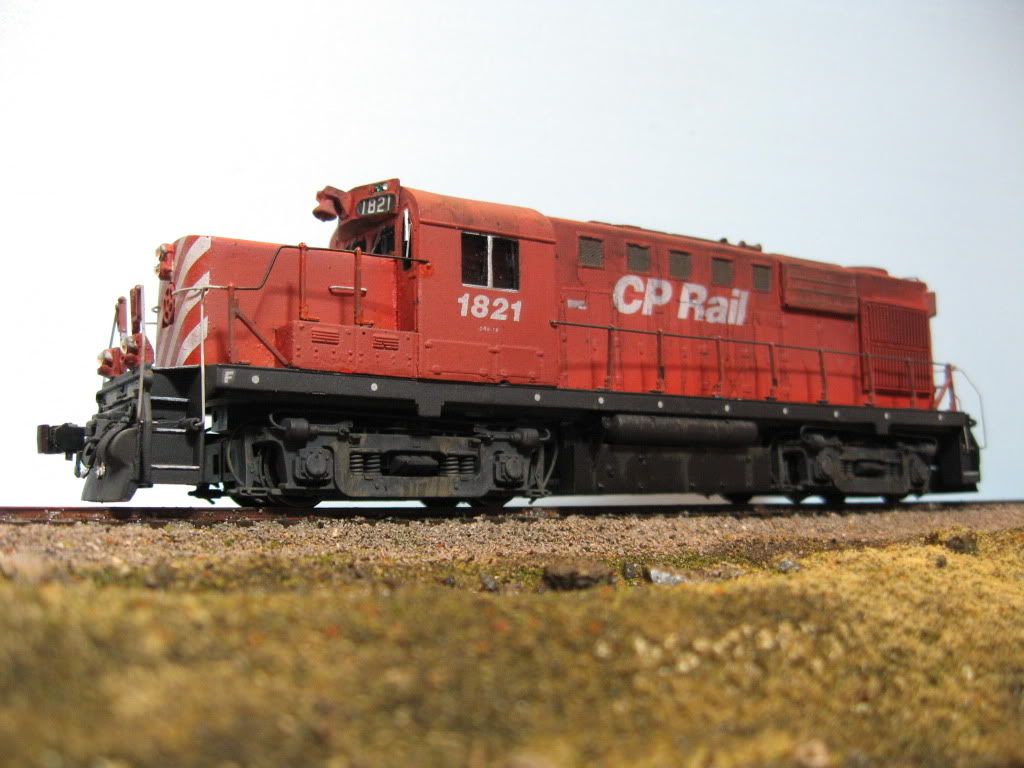
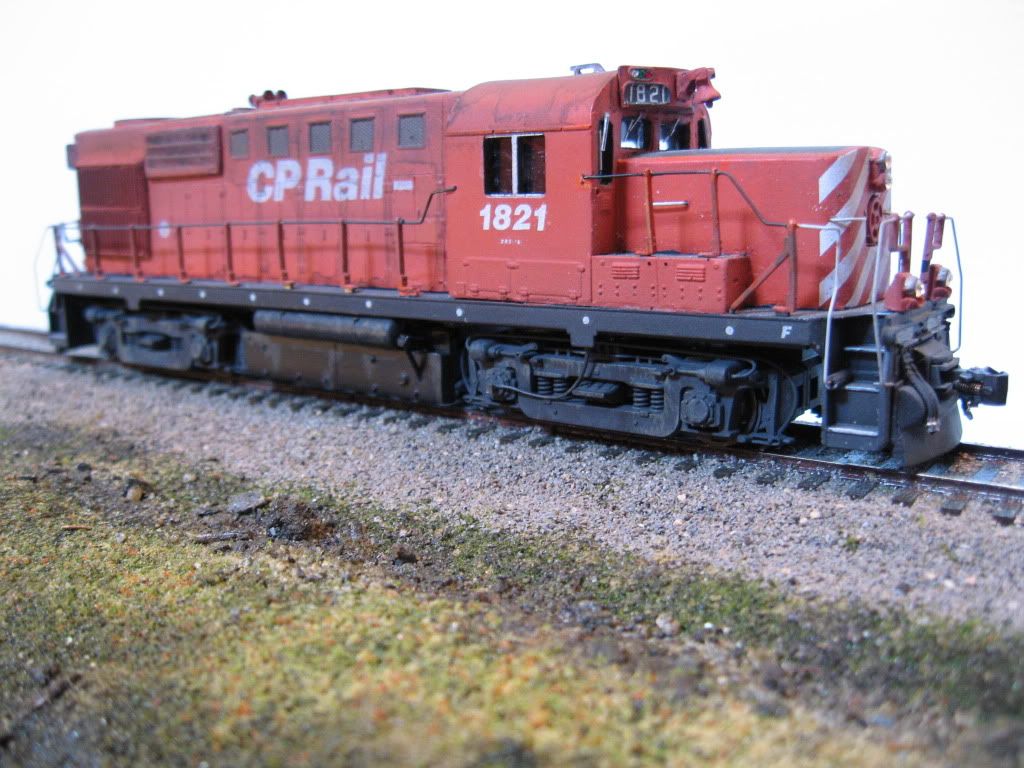
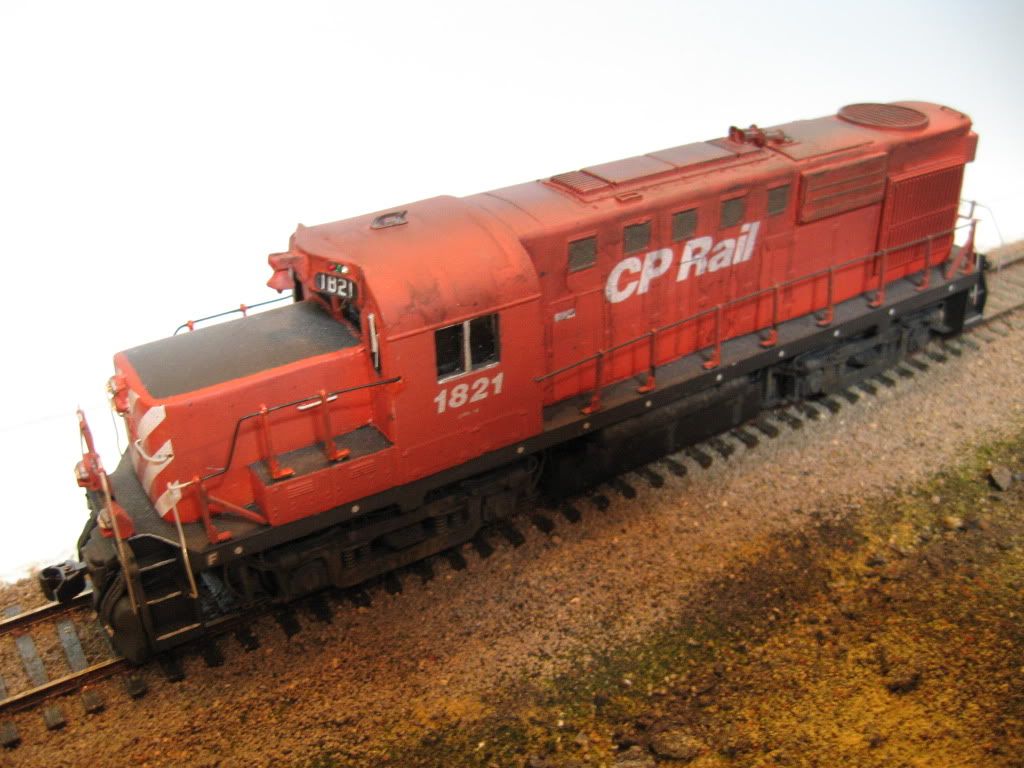
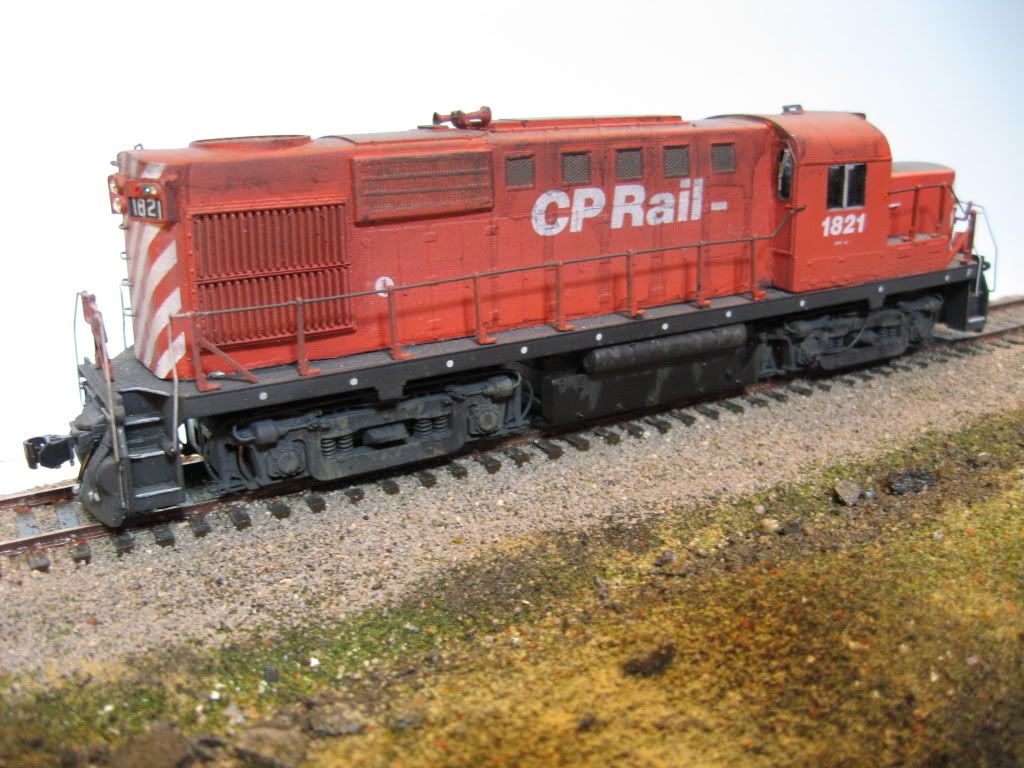
CPR RS18u #1821
Here we have a real relic. A "Fletch-co" shell on an Atlas RS11 chassis. This unit was built about a decade ago, and has proven to be my most reliable unit.
I love it.
This unit was assigned to Smith's Falls, Ontario. It would usually run the local freight to Ottawa and Gatineau, PQ. Almost poetically, the unit was retired at the same time that the Prescott Subdivision was abandoned.
Miniatures by Eric lost-wax brass castings were used for the horn, bell, headlight and ditch light castings. The antennae is a pewter item manufactured by Juneco models. MV lenses were used for all lights. I really enjoy the way they "twinkle" in natural light. Also, I'm not a huge fan of lighting effects on my models. Call me "old fashioned," I don't mind.
The fuel tank was scratchbuilt, using styrene, NBW castings and a fuel filler from High Tech Details. The handrail stanchions from the Atlas model were cut away from the oversized railings. They were drilled out with a #78 bit and hand-formed wire railings were threaded through. The result is nearly-free but prototypical handrails. The speed recorder is scratchbuilt using styrene and single-stranded wire.
I love it.
This unit was assigned to Smith's Falls, Ontario. It would usually run the local freight to Ottawa and Gatineau, PQ. Almost poetically, the unit was retired at the same time that the Prescott Subdivision was abandoned.
Miniatures by Eric lost-wax brass castings were used for the horn, bell, headlight and ditch light castings. The antennae is a pewter item manufactured by Juneco models. MV lenses were used for all lights. I really enjoy the way they "twinkle" in natural light. Also, I'm not a huge fan of lighting effects on my models. Call me "old fashioned," I don't mind.
The model is painted with Testor's Modelflex water-based acrylic CPR Action Red and Flat black . Microscale decals were used to decorate the model. Airbrushing for the exhaust soot, dilute wash india-ink for carbody oil stains and dry-brushing for the grime on the trucks give this unit a truly "beat up" demeanour.
2011-05-27
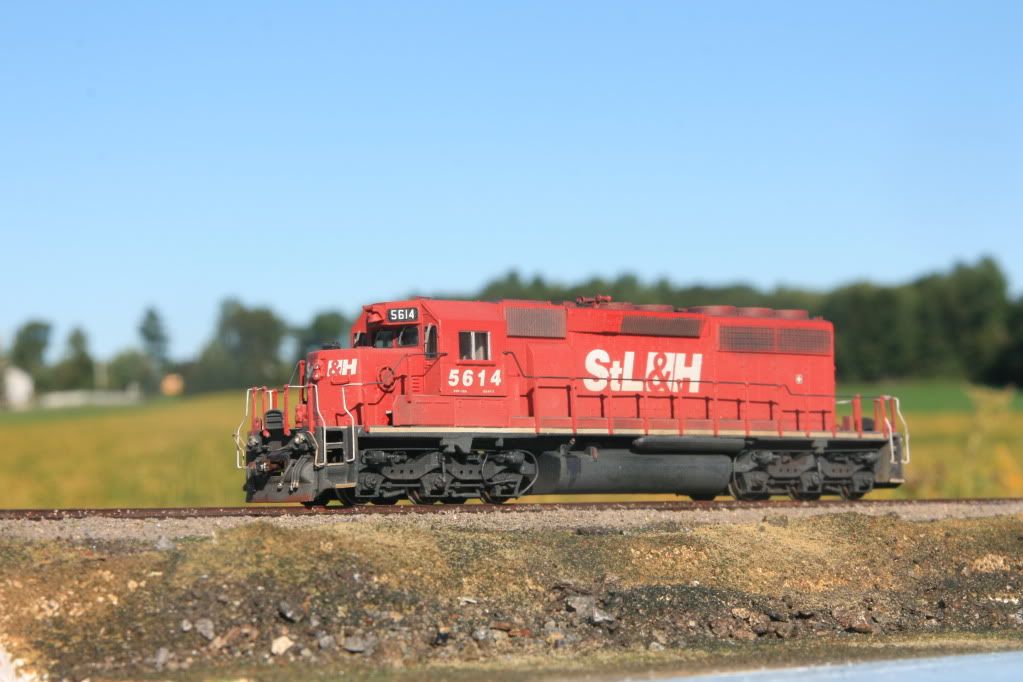
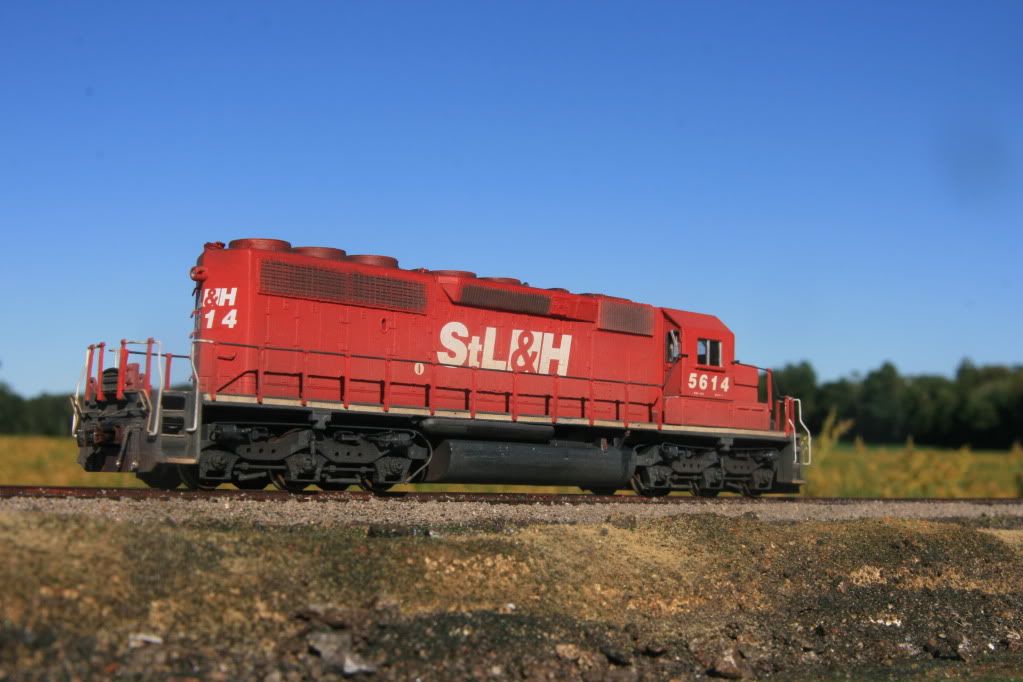
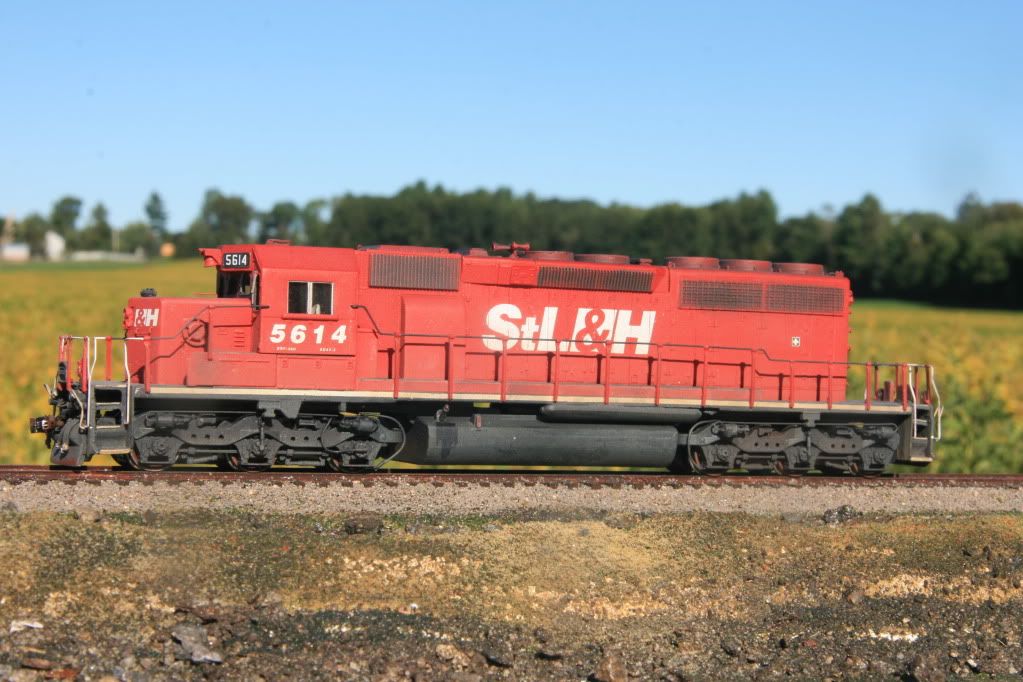
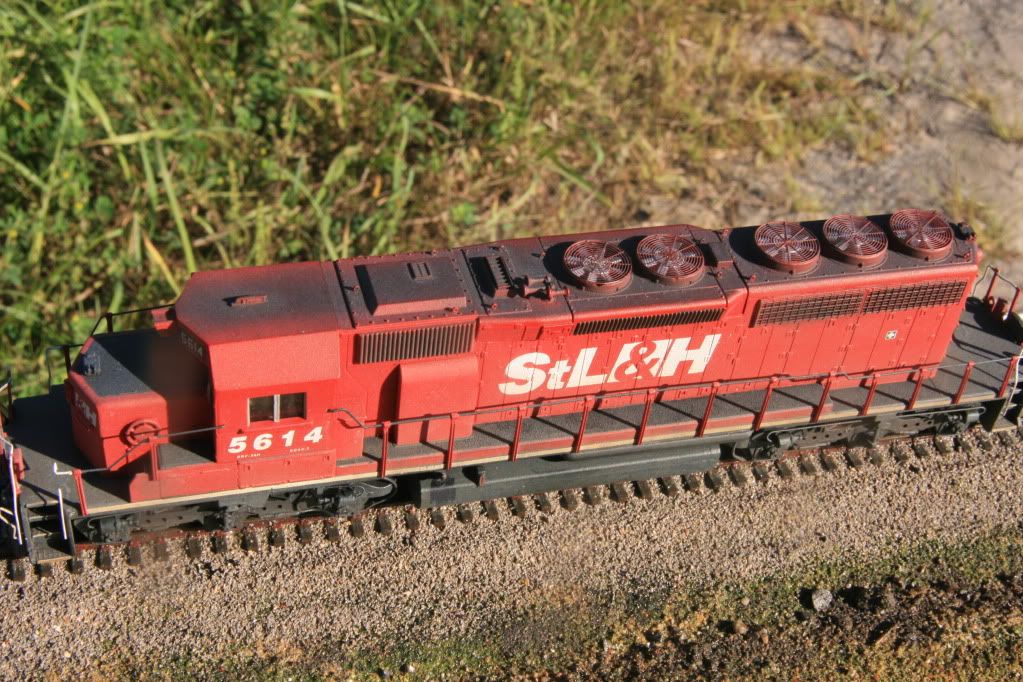
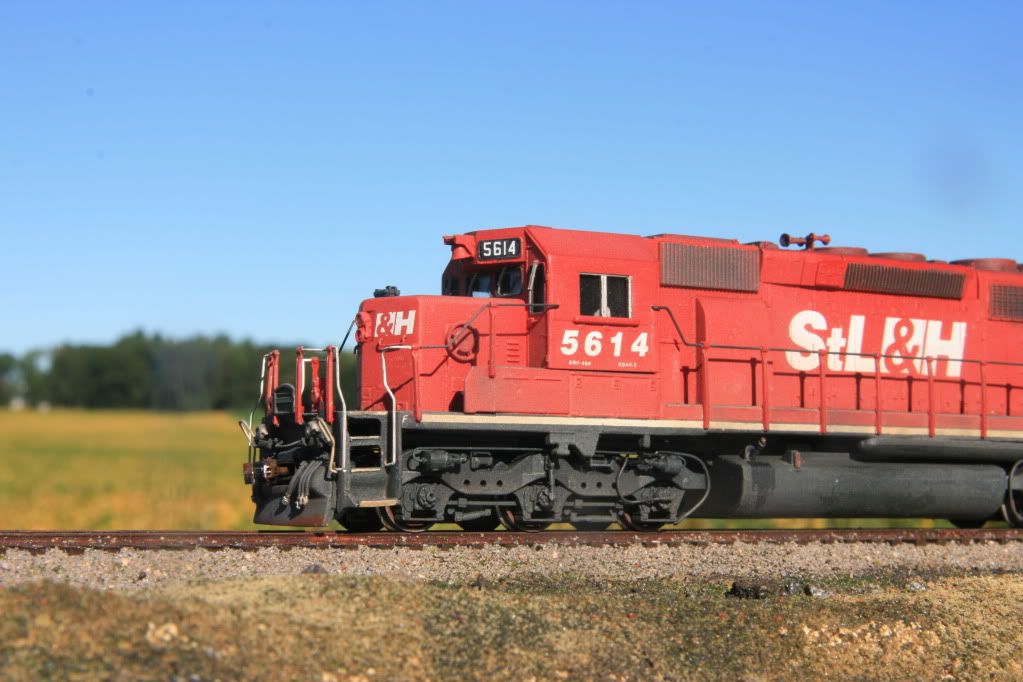
ST. L&H SD40-2 #5614
Another throwback to my many trips to Montreal, QC. This unit was adorned with CPR's stylish ST.L&H logo.
The St. Lawrence and Hudson was more a practice in creative accounting for the CPR than it was a real railroad. Trackage east of Toronto was marketed as the St. L&H for about a decade, with a handful of SD40s and GP9s being repainted. Is it just me, or is this paint job far more eye-catching than the awkward "dual flags" scheme?
This project has been an experiment for me. The unit was fully painted and weathered some 6 years ago. At the time it sported minimal details with Athearn stanchions. Incrementally, I have added Smokey Valley stanchions, full pilot details, (MU and train-line hoses, coupler cut bars, and coupler pockets.)
The most visually appealing upgrade has been the Details Associates etched fan tops. I carefully drilled out the original fans, installed the etched tops and then inserted fan blades from underneath. You can almost imagine the fans spinning as the model passes by.
Miniatures by Eric Canadian steps and horn do just the trick to make this model look authentic. Future plans include upgrading the chassis with a powered Overland drive I've been hanging onto for years. I can't wait to see this unit "bouncing" down the rails.
Testor's Acrylic water-based "Italian Red" and "Flat black" are the only paints needed to coat this model. The decals are a "mini set" produced by Microscale.
2011-04-15
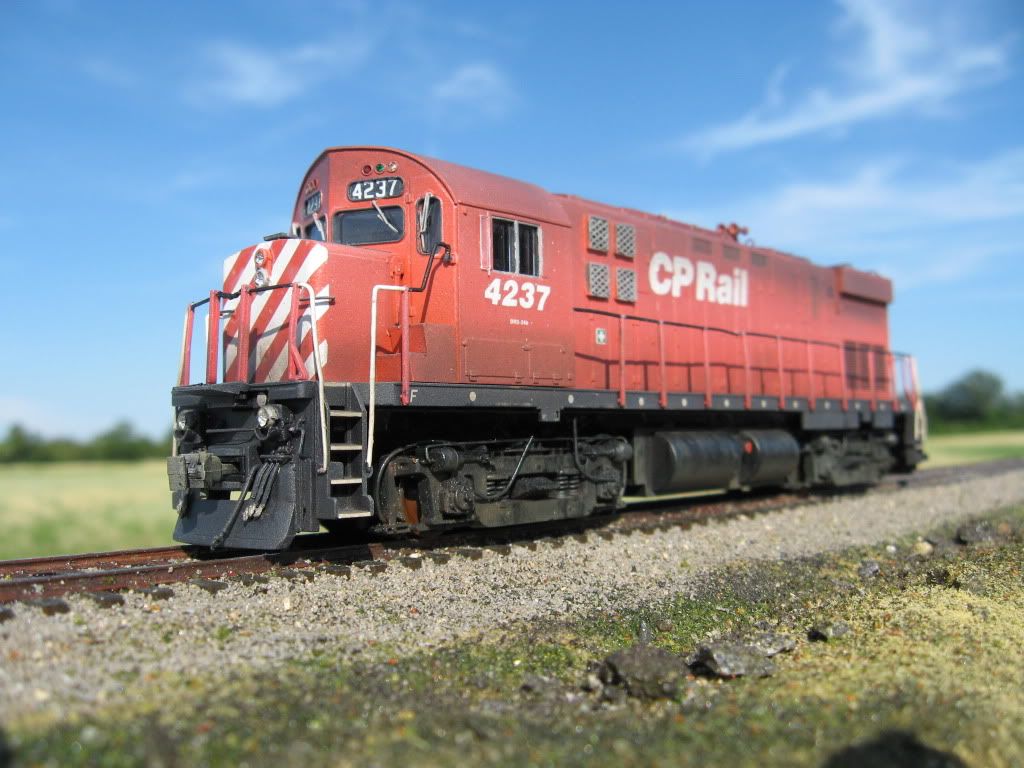
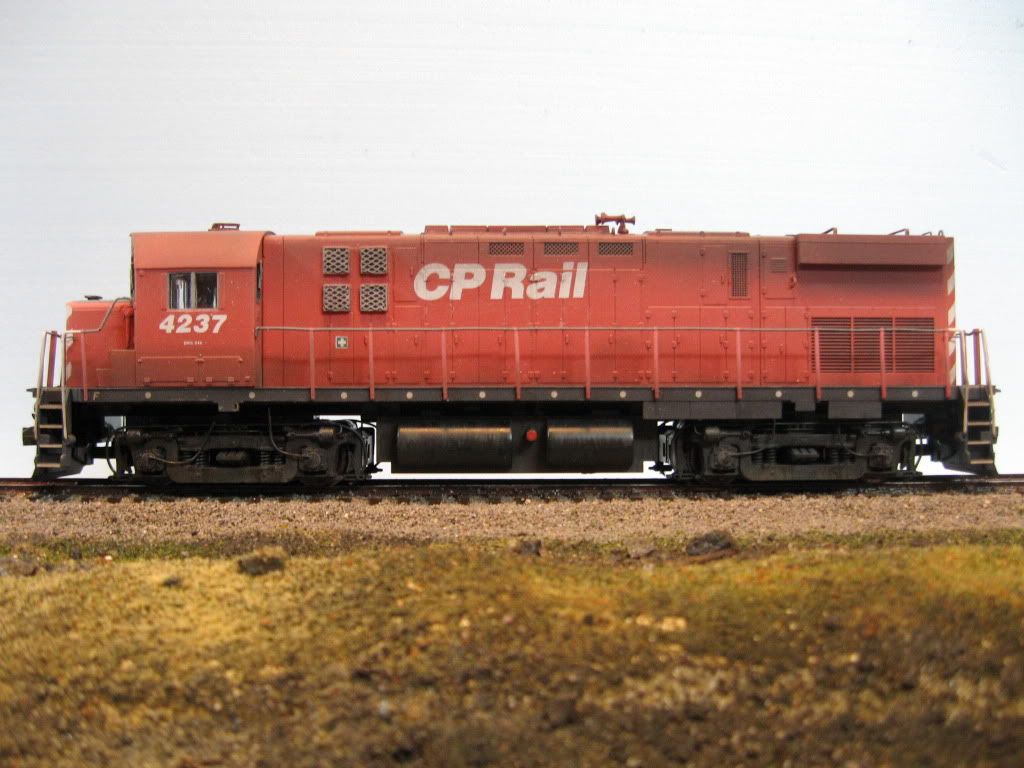
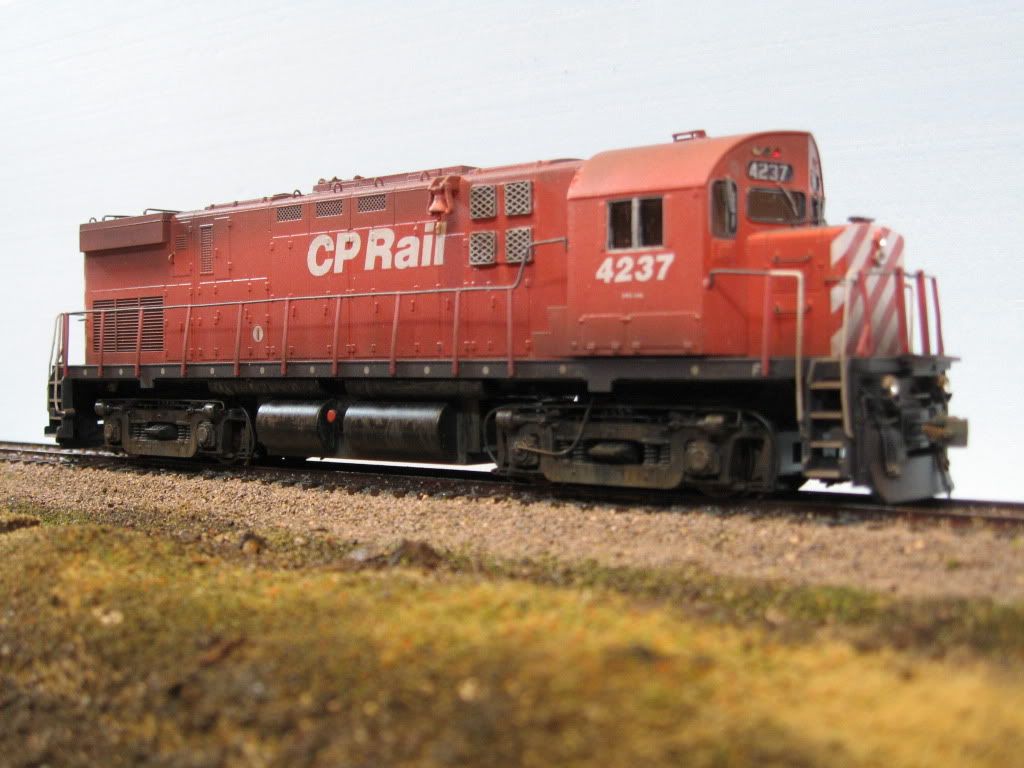
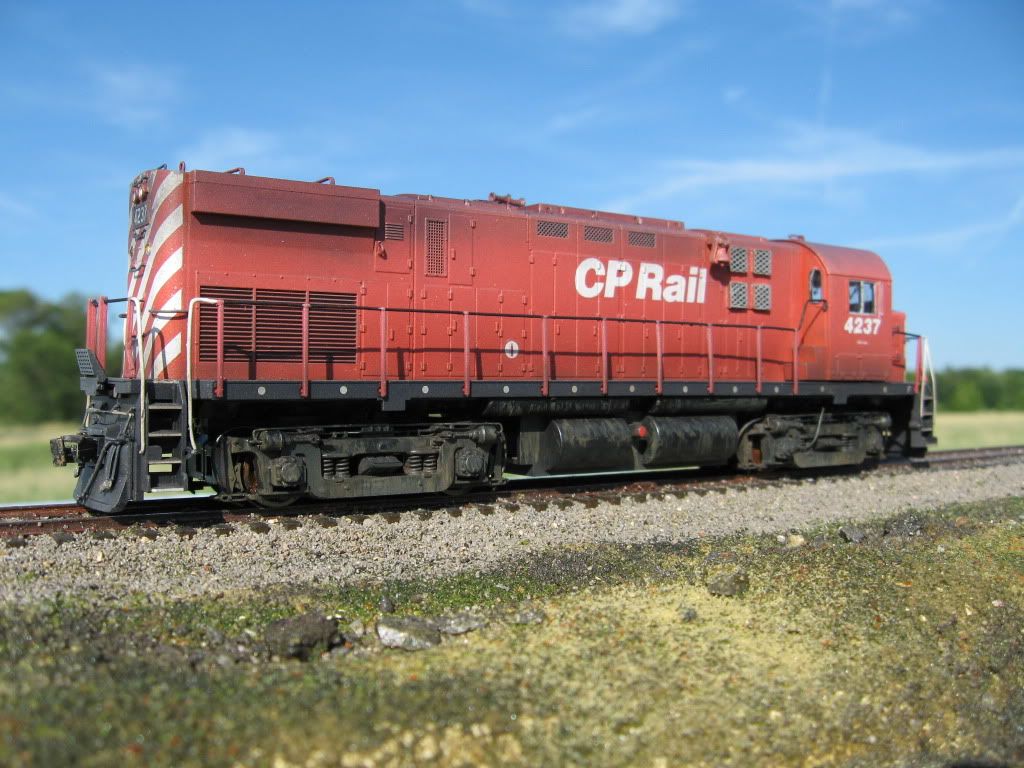
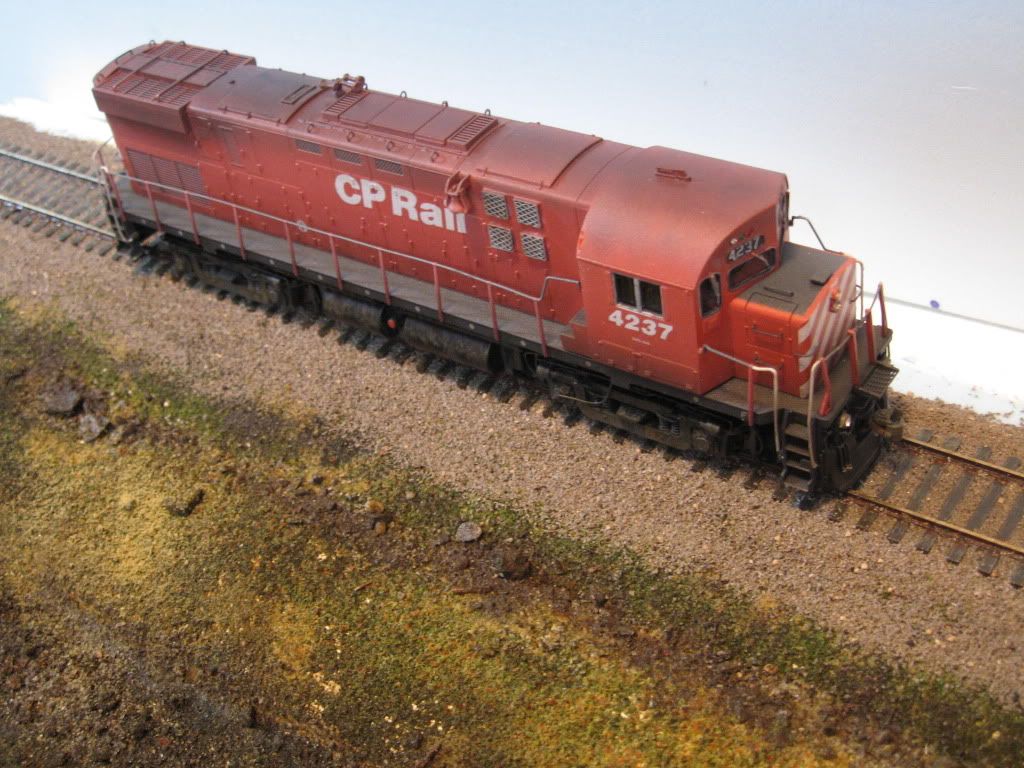
CPR C424 #4237
This is an Atlas Classic C424.
The unit came surprisingly-well made by Atlas. The cab steps, side sills, fuel tank and long hood end were all perfectly matched to CPR specs. Even the sand filler hatches were correct! In fact, the only modification I had to do was install the quartet of inertial filter grilles, located behind the cab on the long hood. They are miniatures by eric parts with K&S etched brass lattice appliques.
The pilots are Kaslo items. Ditch lights and bell are courtesy of Miniatures by Eric. The antenna, MU and trainline hoses are Details West products. The speed recorders were fashioned from styrene and single-stranded electrical wire. A-line plastic wipers
2011-04-11
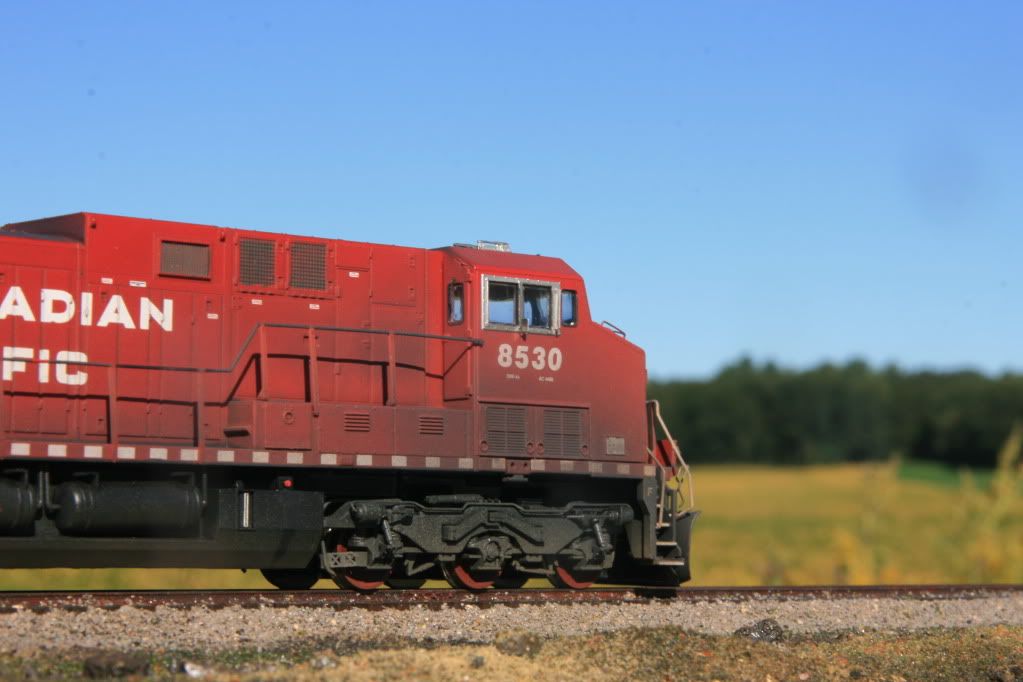
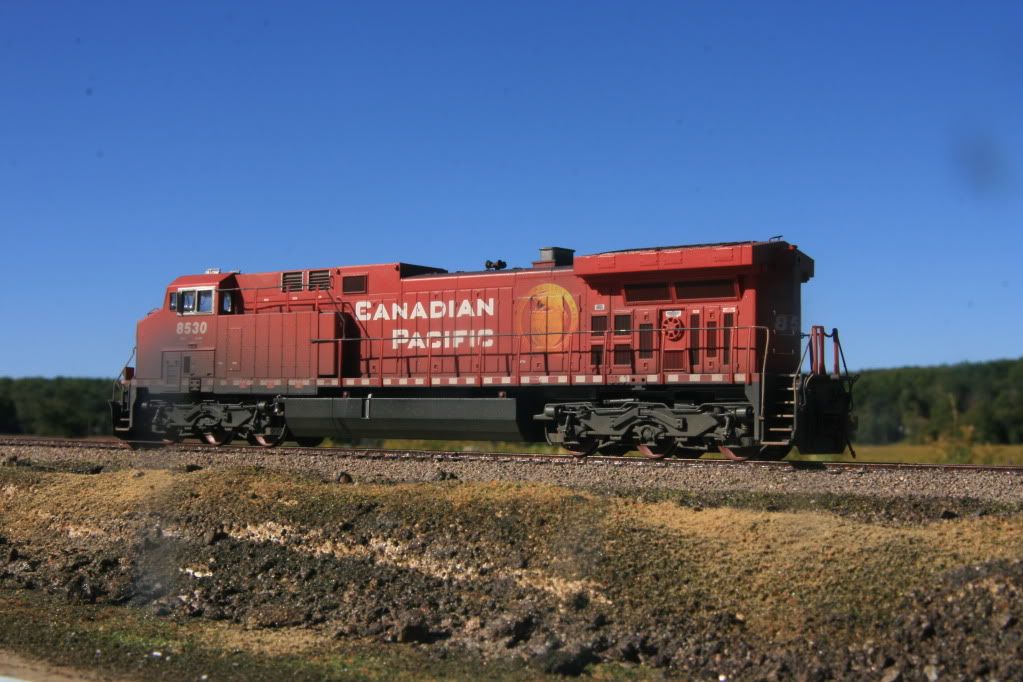
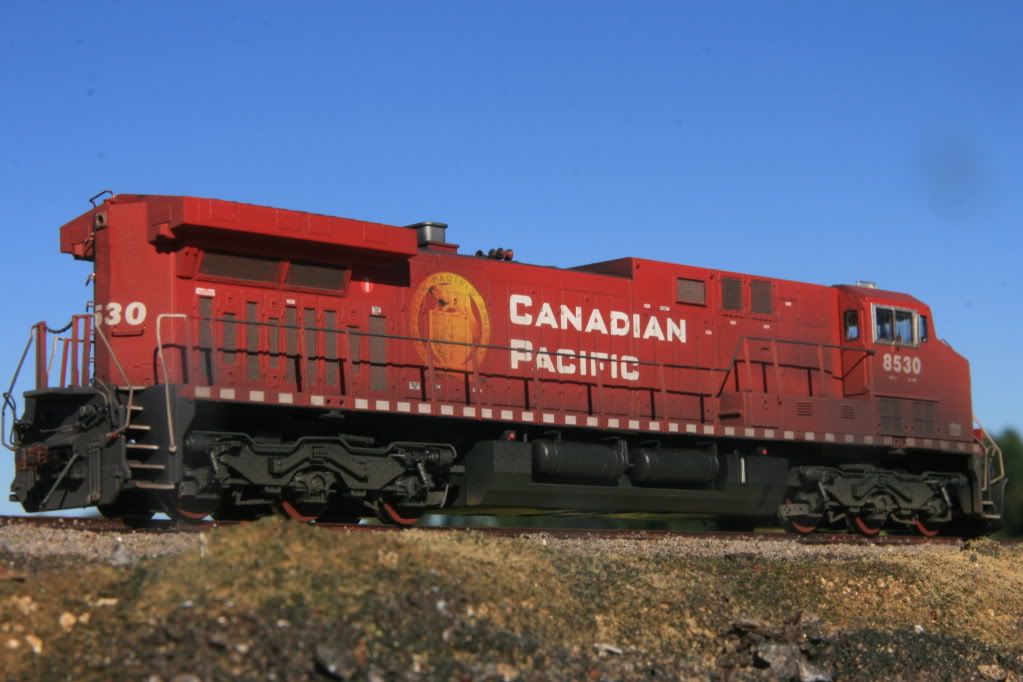
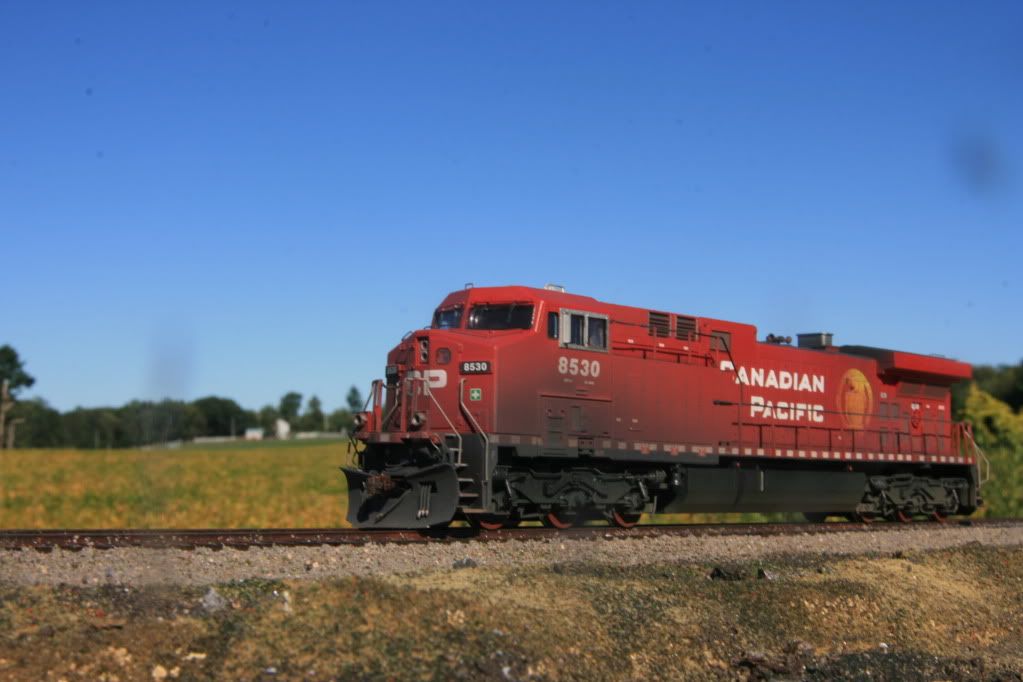
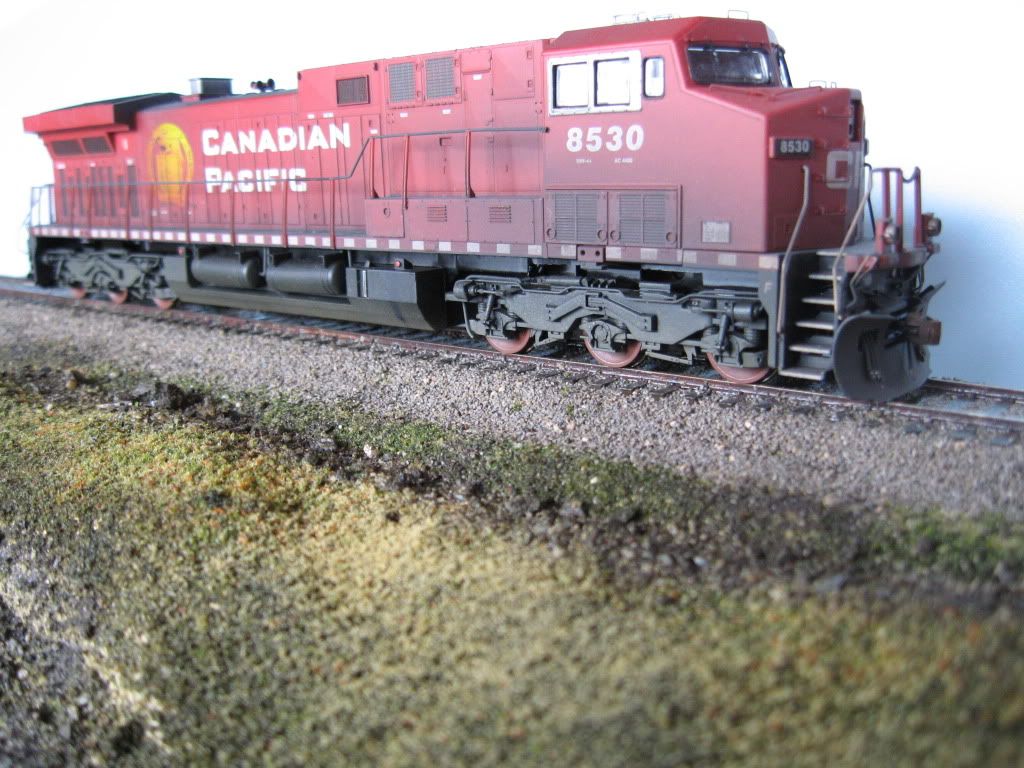
CPR AC4400CW #8530
This is an Athearn "RTR" AC4400CW with factory-applied paint.
The various sand and brake lines were added, along with a speed recorder fashioned from styrene and single-stranded wire. Also, the rear sand filler hatch recess was filled, with the sand filler hatch moved to the top of the carbody. (This is not standard for all of CP's GEs. Some still sport the recessed style.) Hand-formed coupler lift bars were attached to the pilot faces with Details Associates brackets.
The addition of a Details West horn, antennae, ditch lights, MU hoses and plough compliment and already superbly executed model.
Subscribe to:
Posts (Atom)